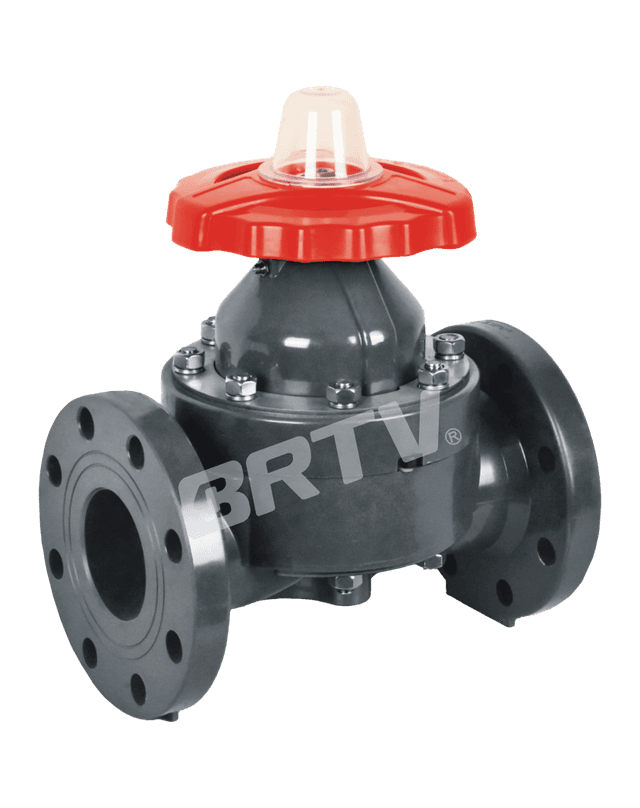
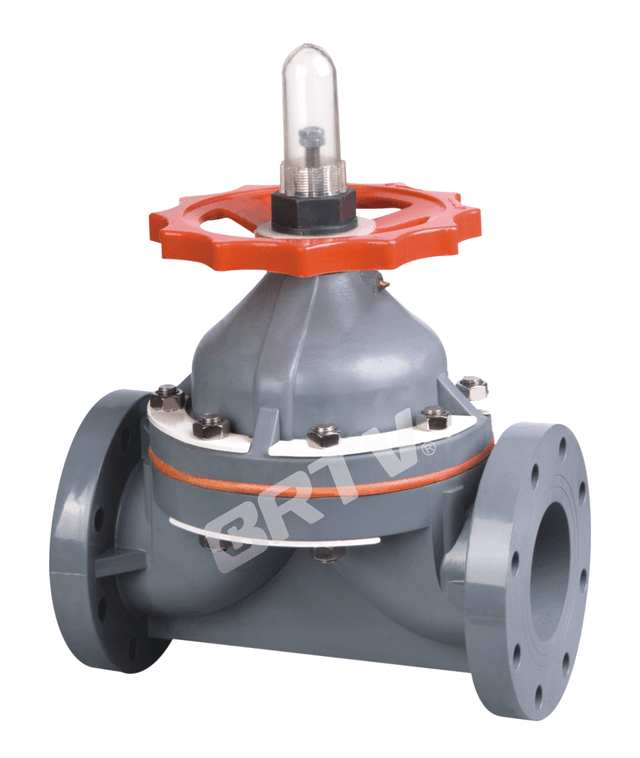
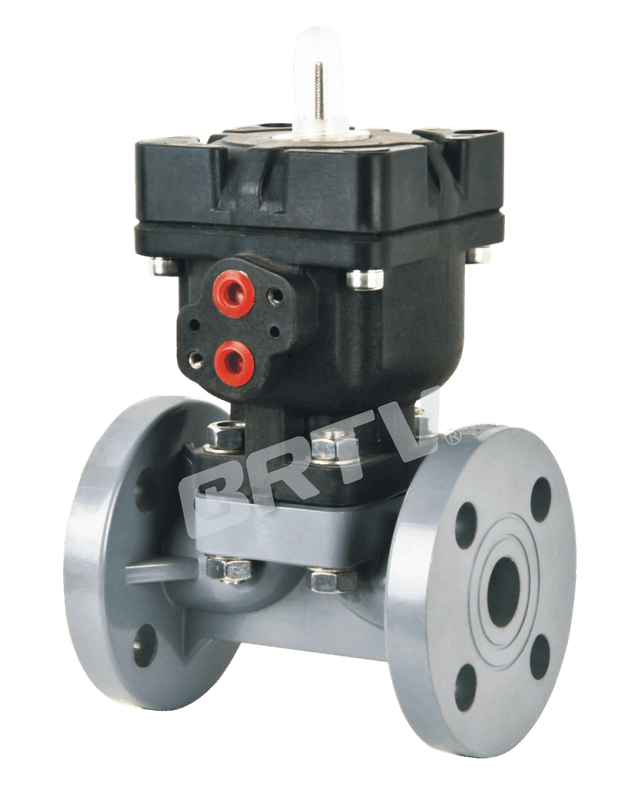
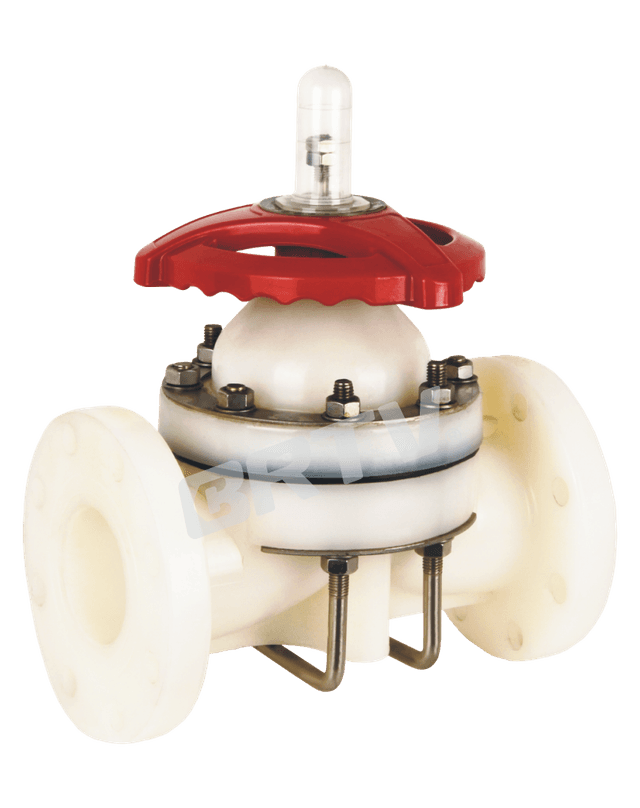
Features
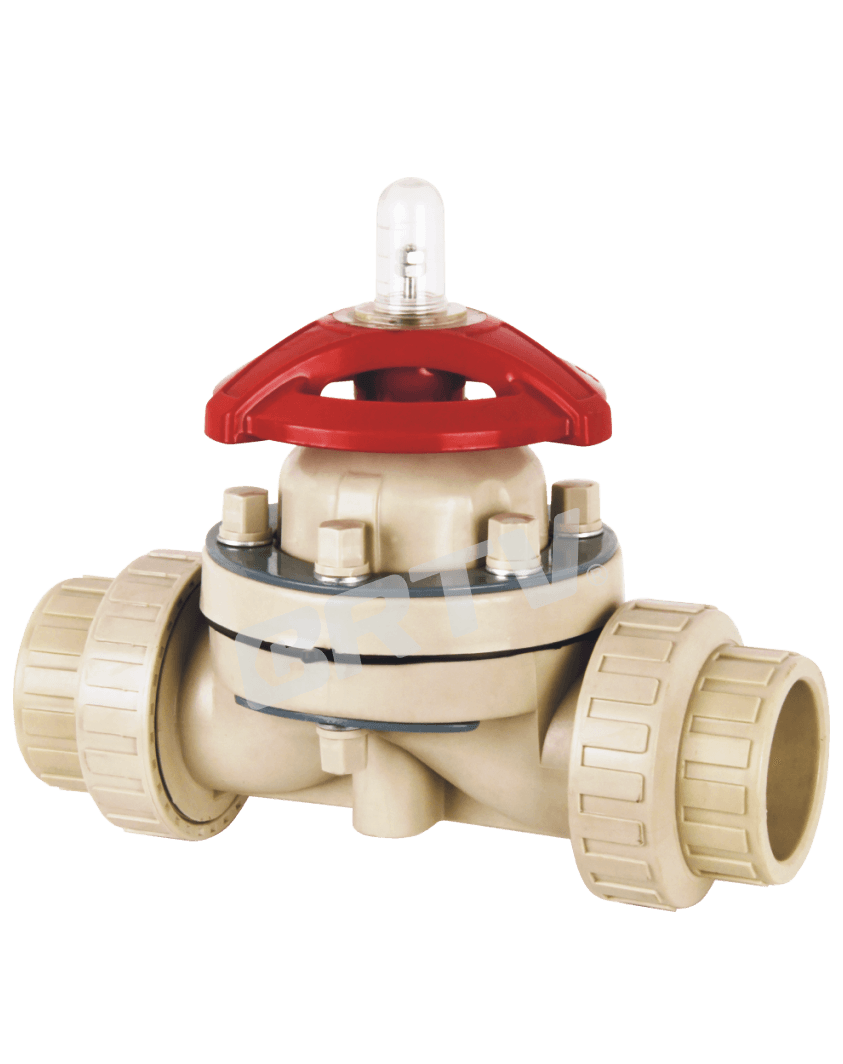
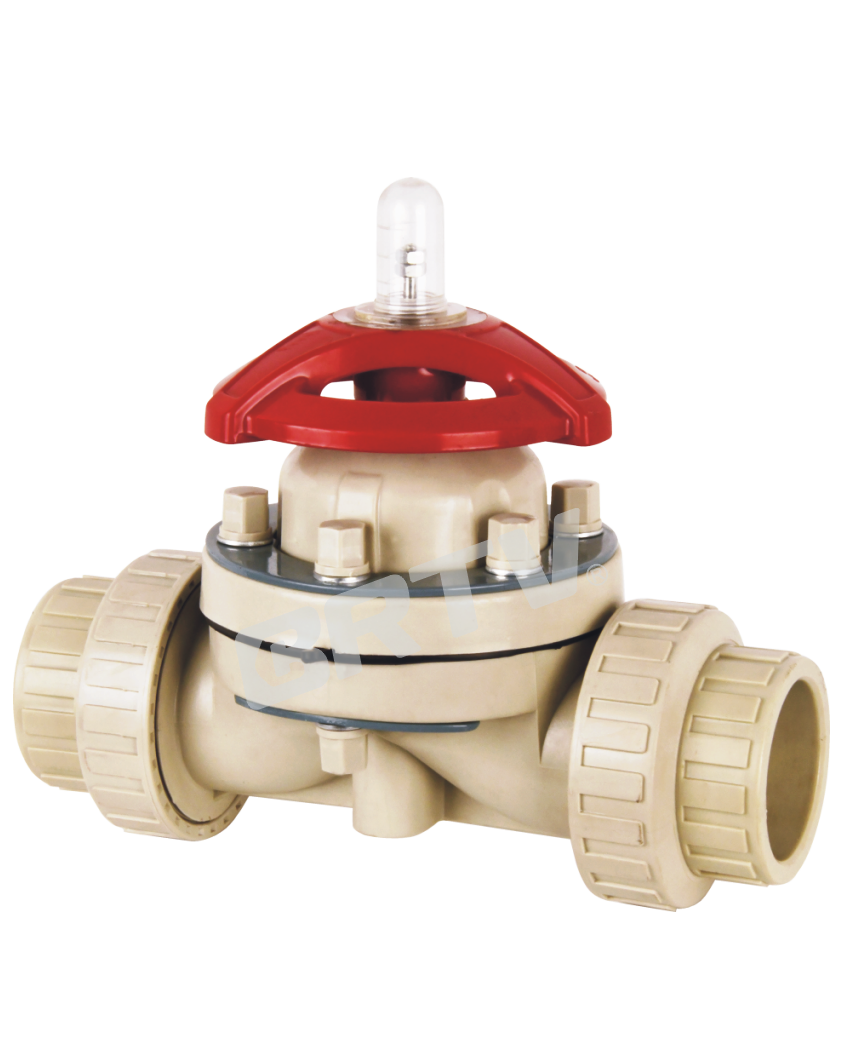
• The sealing characteristics are similar to flanged diaphragm valves, with large flow capacity.
• Valves and pipelines are connected through flexible joints, making replacement easy.
• Previous cases have shown that installation errors and other factors in factory pipelines can easily cause excessive stress on the union nut, leading to valve leakage or even damage. Therefore, it is not recommended to use union nut connections for sizes above DN50; connected (flanged) structures are preferred.
Parts & Material
| No. | Parts | Materials |
|---|
| 1 | Gauge Cover | PC |
| 2 | Stud Nut | Steel, Stainless Steel |
| 3 | Hand Wheel | ABS, FRPP |
| 4 | Bonnet | FRPP, PPH, UPVC, CPVC, PVDF |
| 5 | Sleeve | Cast Iron, Copper Alloy |
| 6 | Board | Plastic-coated Steel, Stainless Steel |
| 7 | Stud Bolt & Nut | Steel & Plastic Nuts, Stainless Steel |
| 8 | Union Nut | FRPP, PPH, UPVC, CPVC, PVDF |
| 9 | Body | FRPP, PPH, UPVC, CPVC, PVDF |
| 10 | O-Ring | EPDM, FPM |
| 11 | End Connector | FRPP, PPH, UPVC, CPVC, PVDF |
| 12 | Stem | Steel, Stainless Steel, Copper Alloy |
| 13 | Compressor | PVDF, CPVC, Cast Iron |
| 14 | Cushion | EPDM |
| 15 | Diaphragm | EPDM, FPM, FEP, PFA, PTFE |
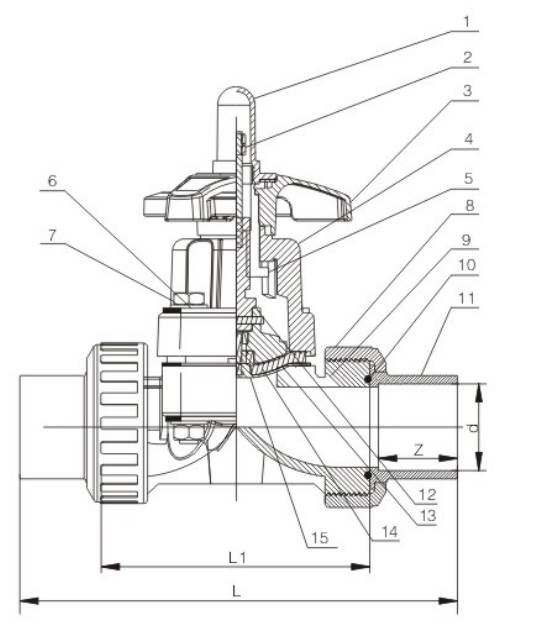
Dimensions Table
| DN | L1 | Socket End (HG/DIN) | Socket End (JIS) | Socket End (ANSI) | Thread End (HG/DIN) | Thread End (JIS) | Thread End (ANSI) | Z | L |
|---|
| 15 | 110 | 20 | 22 | 21.3 | Rc 1/2 | PT 1/2 | NPT 1/2 | 17 | 155 |
| 20 | 110 | 25 | 26 | 26.7 | Rc 3/4 | PT 3/4 | NPT 3/4 | 24 | 165 |
| 25 | 110 | 32 | 32 | 33.4 | Rc 1 | PT 1 | NPT 1 | 28 | 173 |
| 32 | 175 | 40 | 38 | 42.2 | Rc 1-1/4 | PT 1-1/4 | NPT 1-1/4 | 29 | 248 |
| 40 | 175 | 50 | 48 | 48.3 | Rc 1-1/2 | PT 1-1/2 | NPT 1-1/2 | 35 | 257 |
| 50 | 200 | 63 | 60 | 60.3 | Rc 2 | PT 2 | NPT 2 | 39 | 292 |
DN65–DN125 socket diaphragm valve is a handmade product. For more information, please consult the distribution consultant.
The dimensions in this table are based on UPVC material.
Manufacturing Process
Step 1: Order and Design
Based on the customer’s operating conditions (pressure, temperature, and medium), we confirm specifications and standards, complete the structural design of the true union diaphragm valve (valve body, diaphragm, and union end dimensions), and produce 3D drawings and mold proposals.
Step 2: Raw Material Preparation & Molding
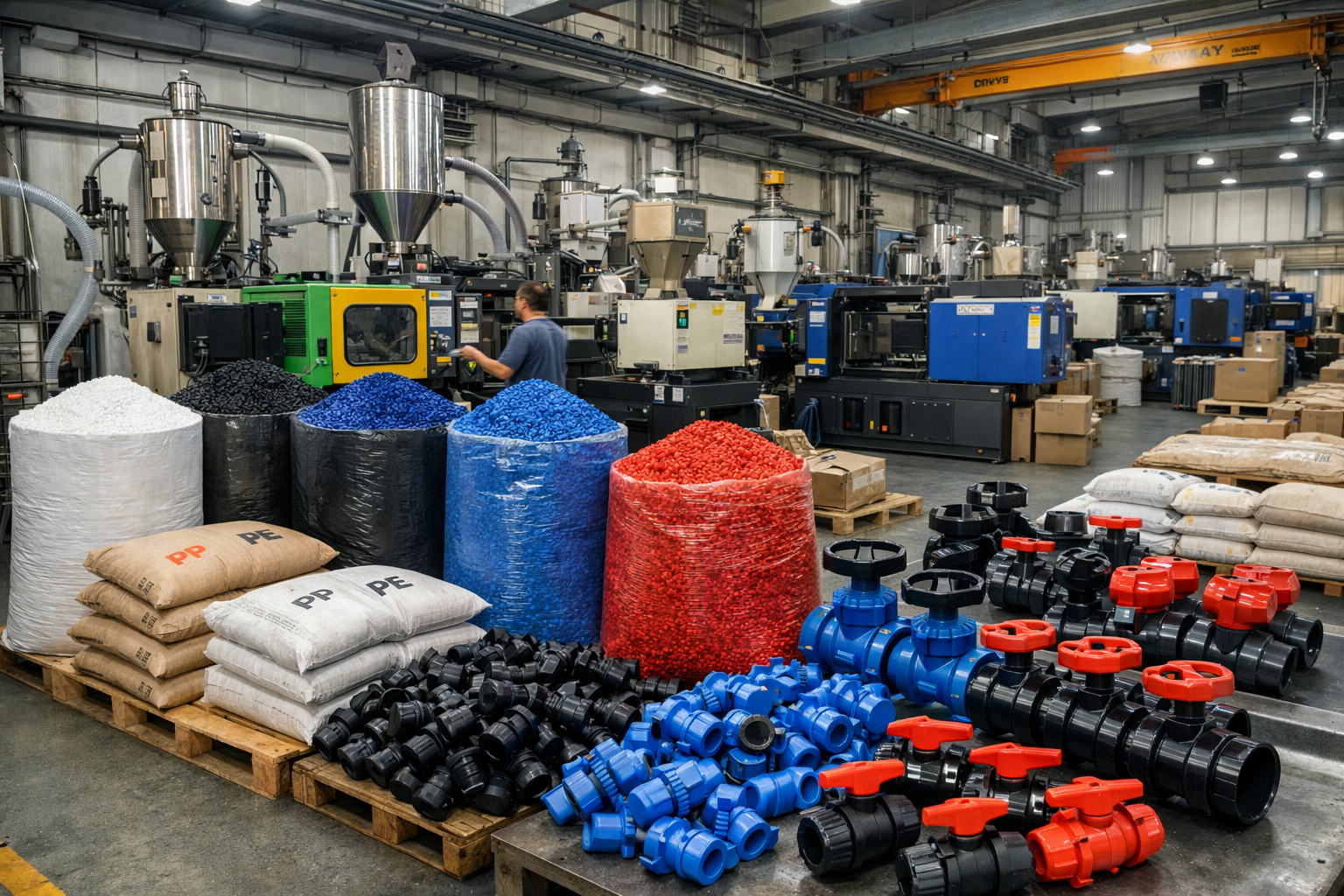
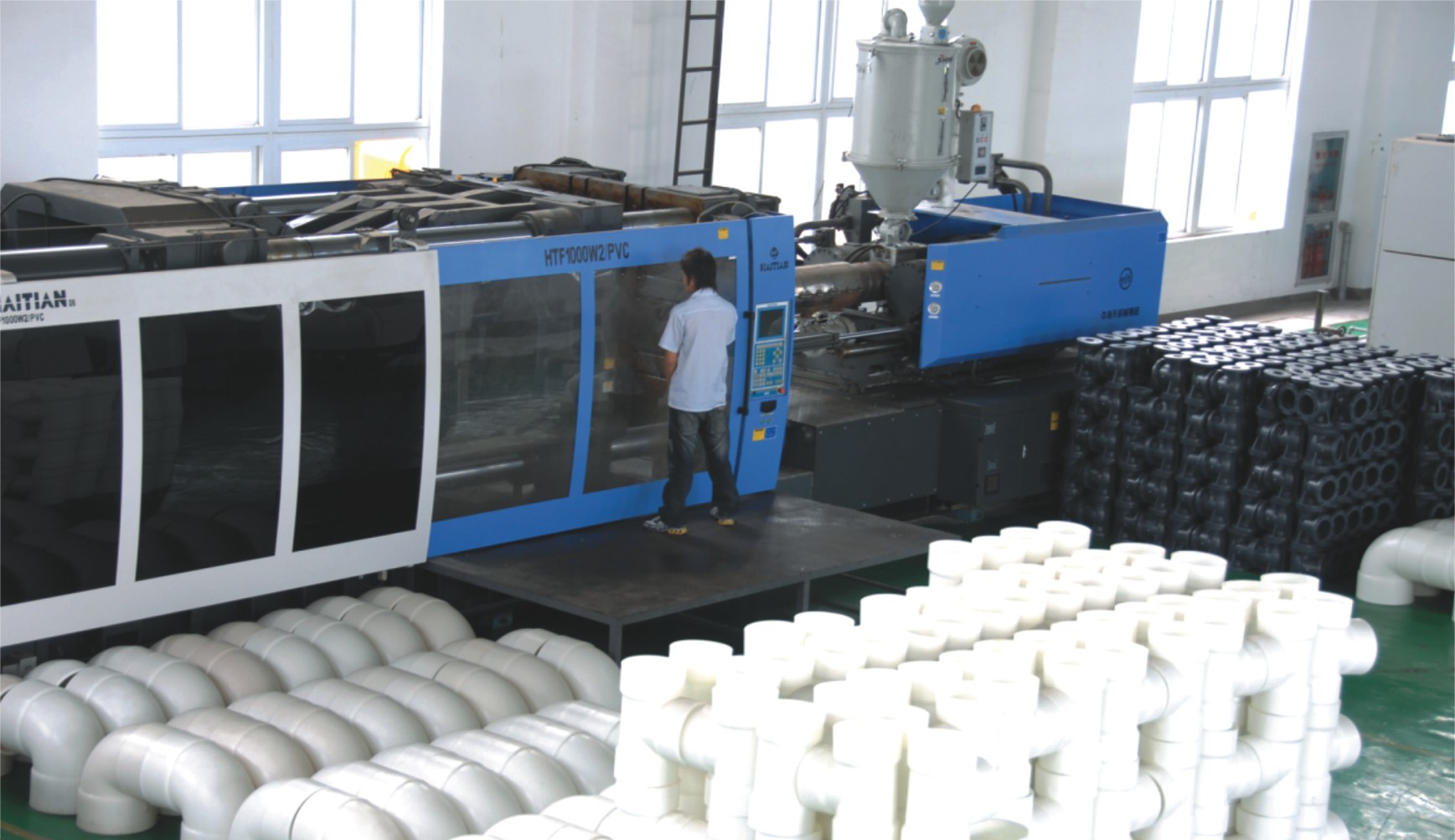
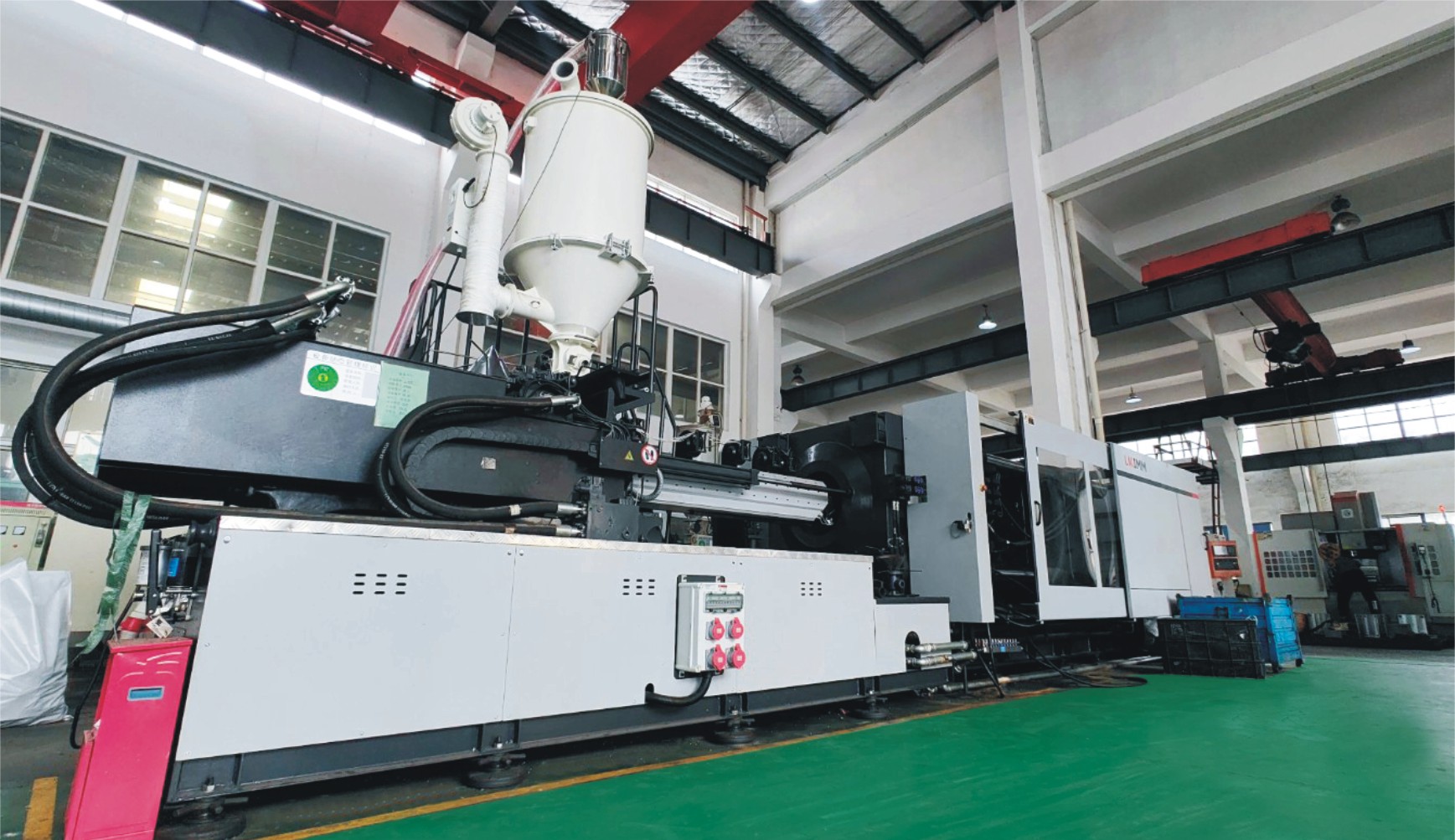
Select raw materials such as PVC, CPVC, or PP for drying treatment, and manufacture key plastic components—including the true union diaphragm valve body, union fittings, and handwheels—using injection molding.
Step 3: Machining
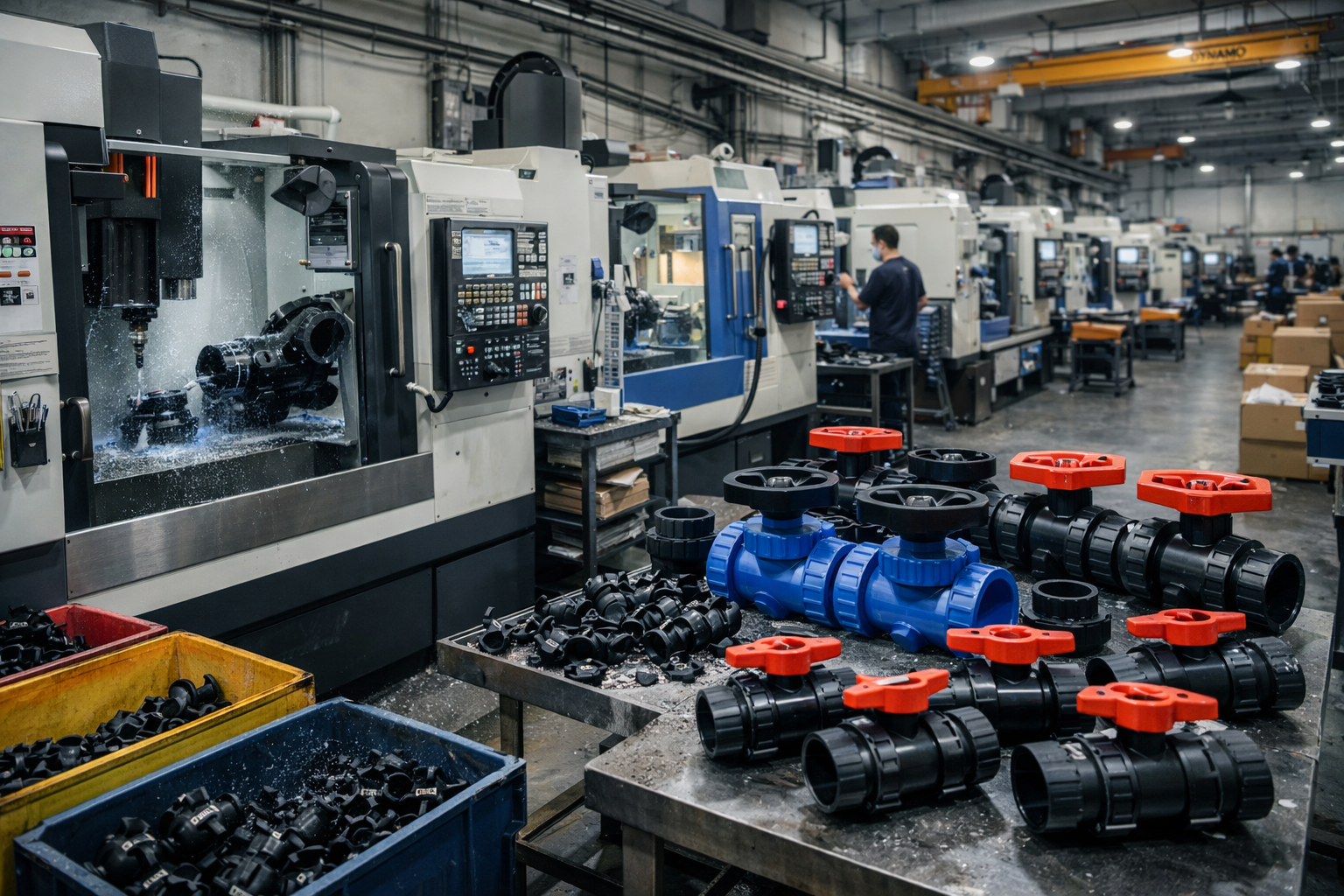
Perform precision machining on the injection-molded true union diaphragm valve body and connection points (e.g., sealing surface finishing, threading) to ensure dimensional accuracy and sealing performance.
Step 4: Assembly
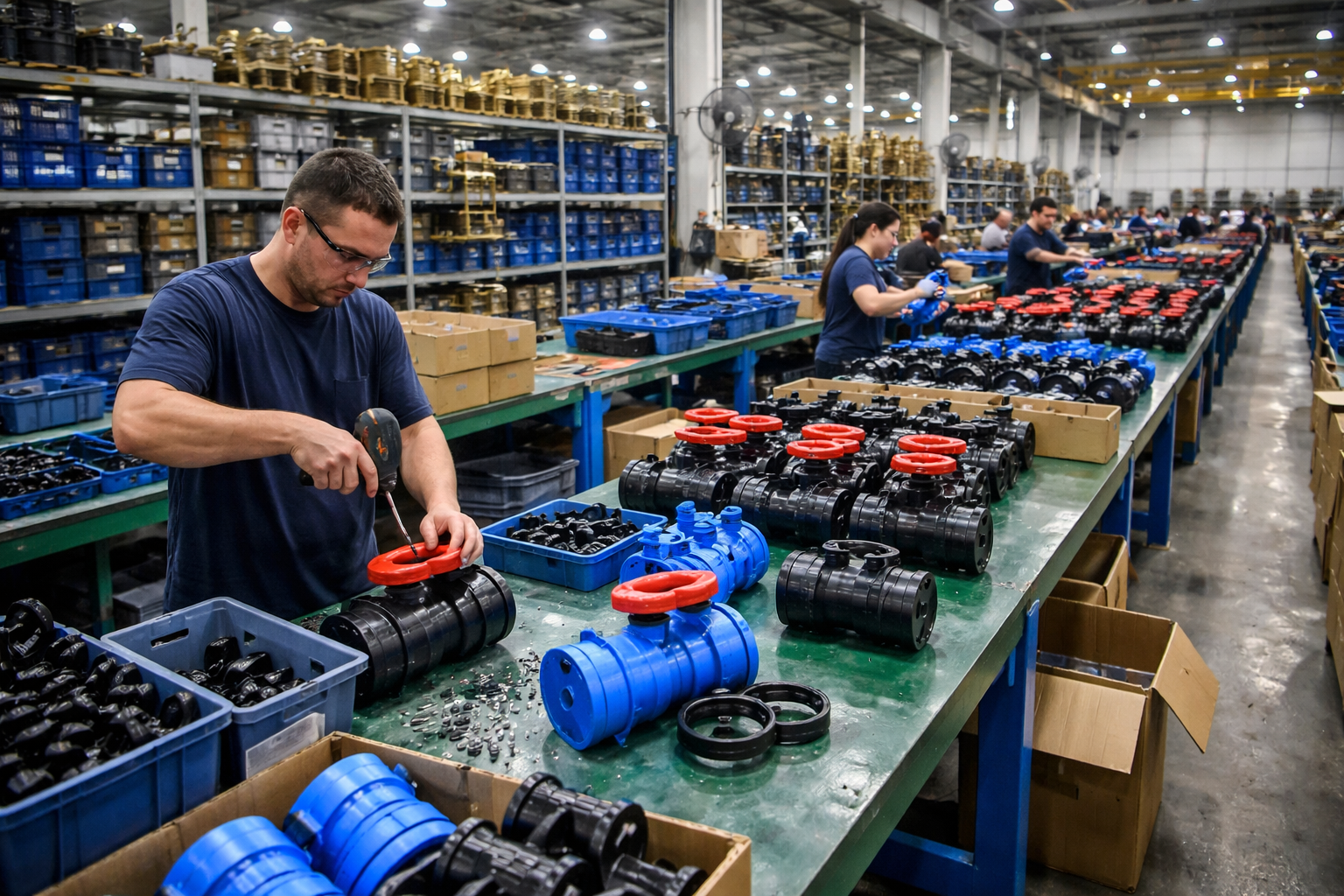
Assemble the diaphragm (EPDM/PTFE) with the valve body, install the valve stem, handwheel, and union nut, and complete the overall assembly of the true union diaphragm valve.
Step 5: Testing & Quality Assurance
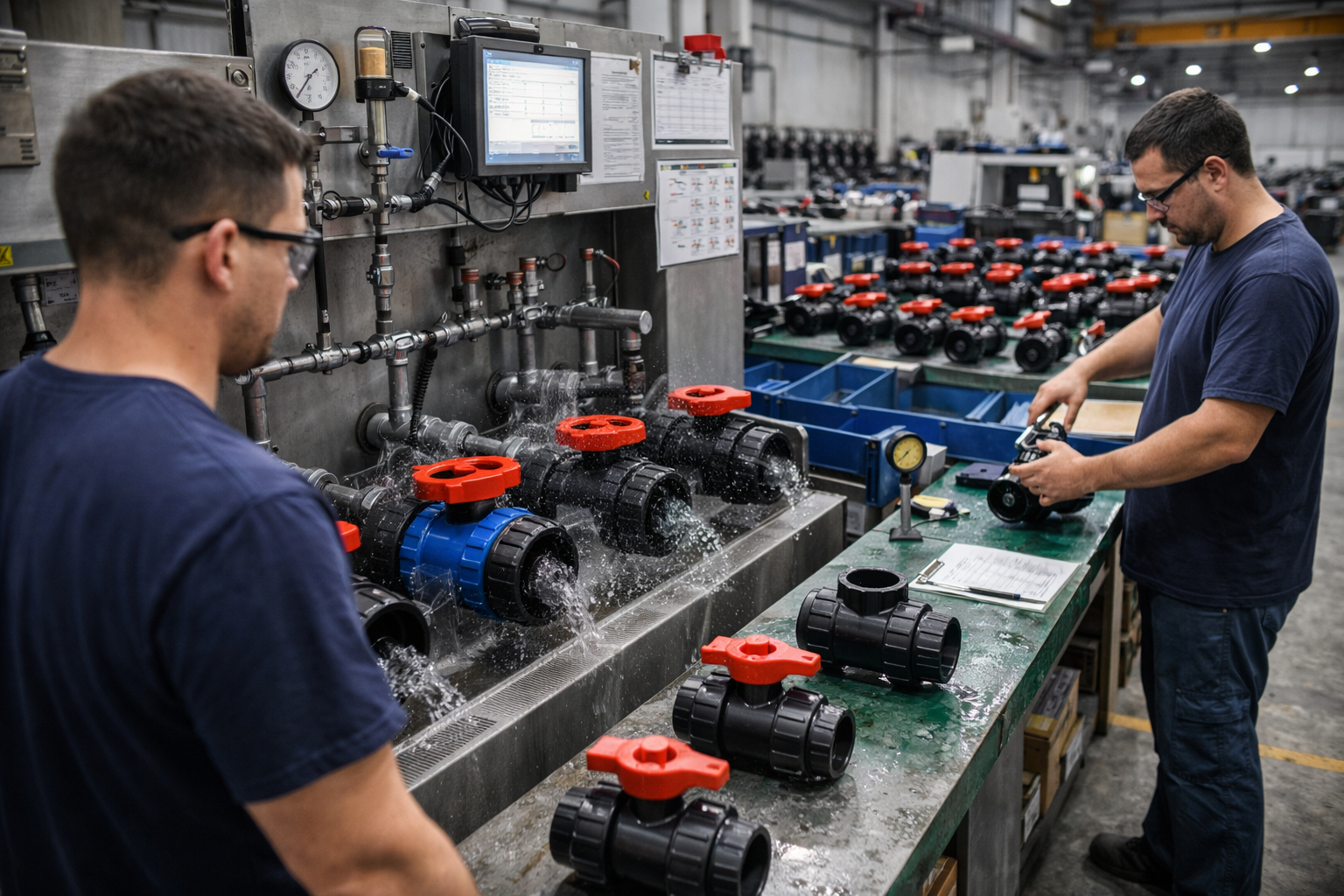
Each true union diaphragm valve undergoes pressure testing, leak testing, and visual inspection to ensure compliance with relevant standards (such as ISO and ANSI).
Step 6: Finishing, Packaging and Shipment
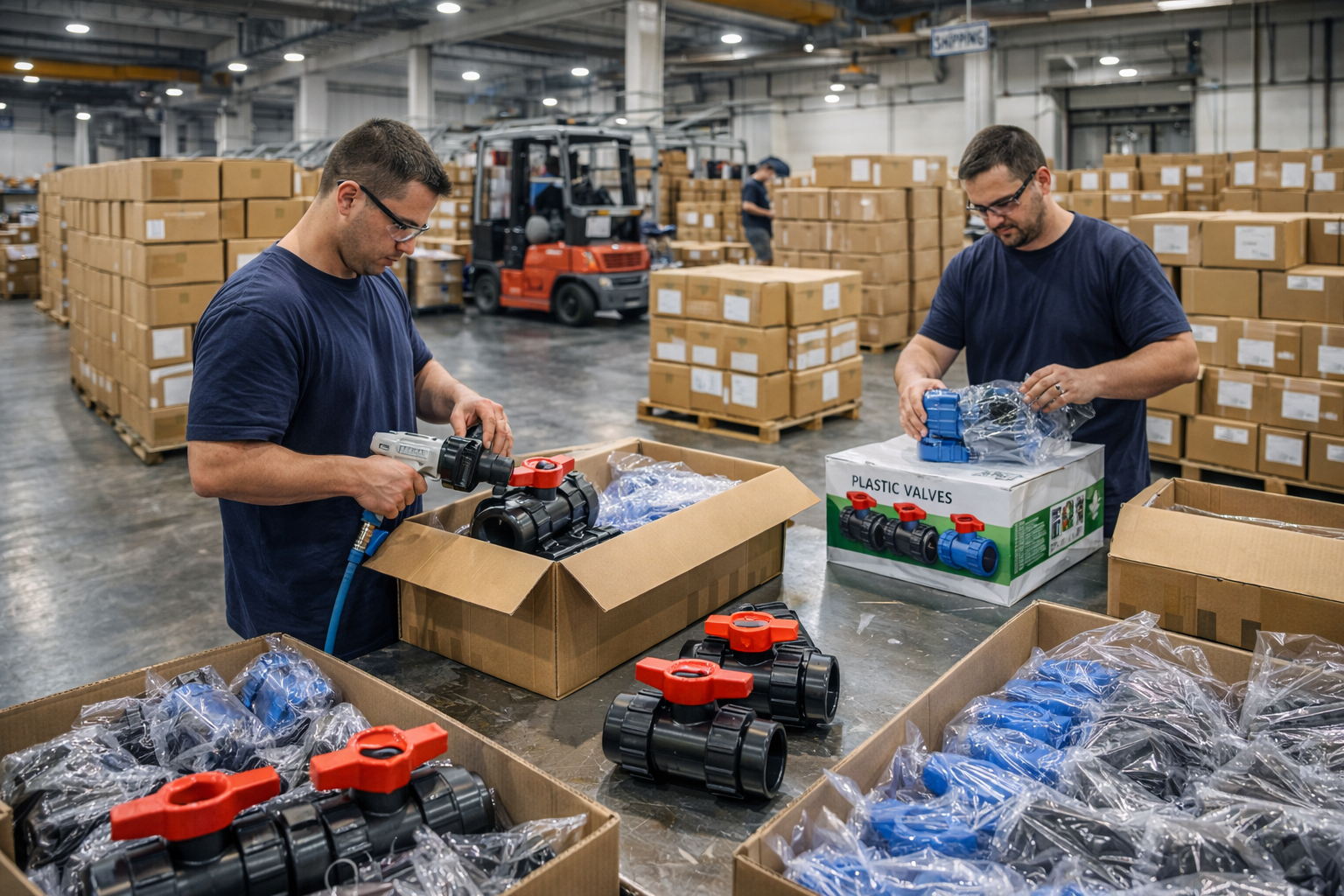
The valves are cleaned, protected, labeled, and packed into boxes, then shipped according to the order schedule.
Applications
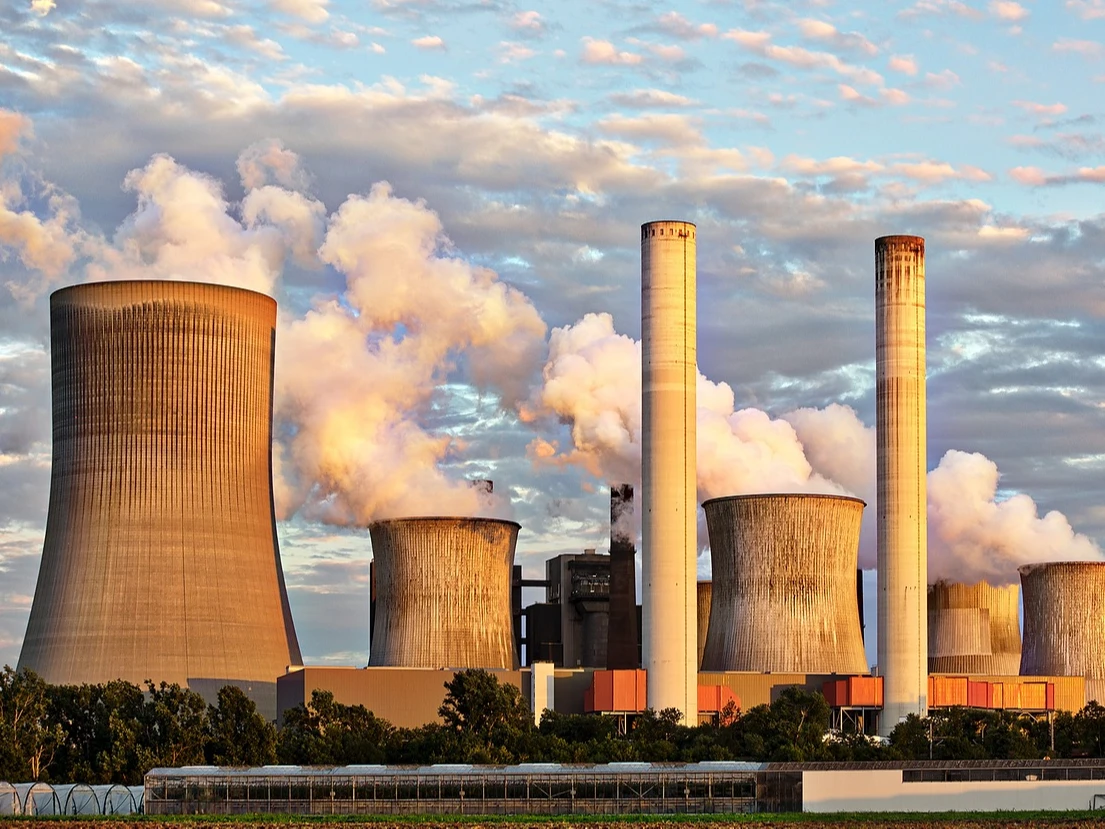
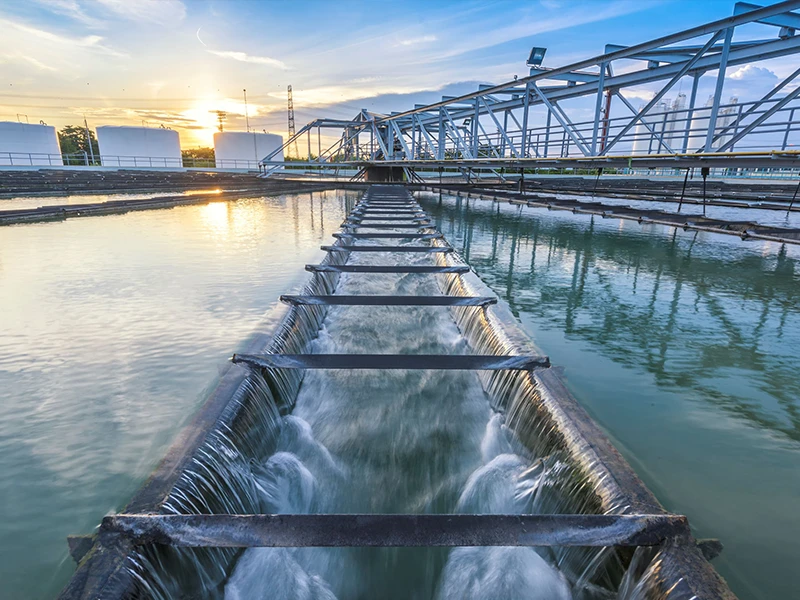
In chemical and highly corrosive environments, these systems safely transport media such as sulfuric acid and hydrochloric acid using corrosion-resistant materials and diaphragm structures; in water treatment projects, they are used to regulate flow, pressure, and system control; in the pharmaceutical and food processing industries, their hygienic design and ease of cleaning and disinfection help prevent contamination; and in the semiconductor and microelectronics industries, they are used to transport high-purity reagents, with convenient connection methods that meet installation and maintenance requirements in cleanroom environments.
These valves are widely used in:
Agriculture and Irrigation
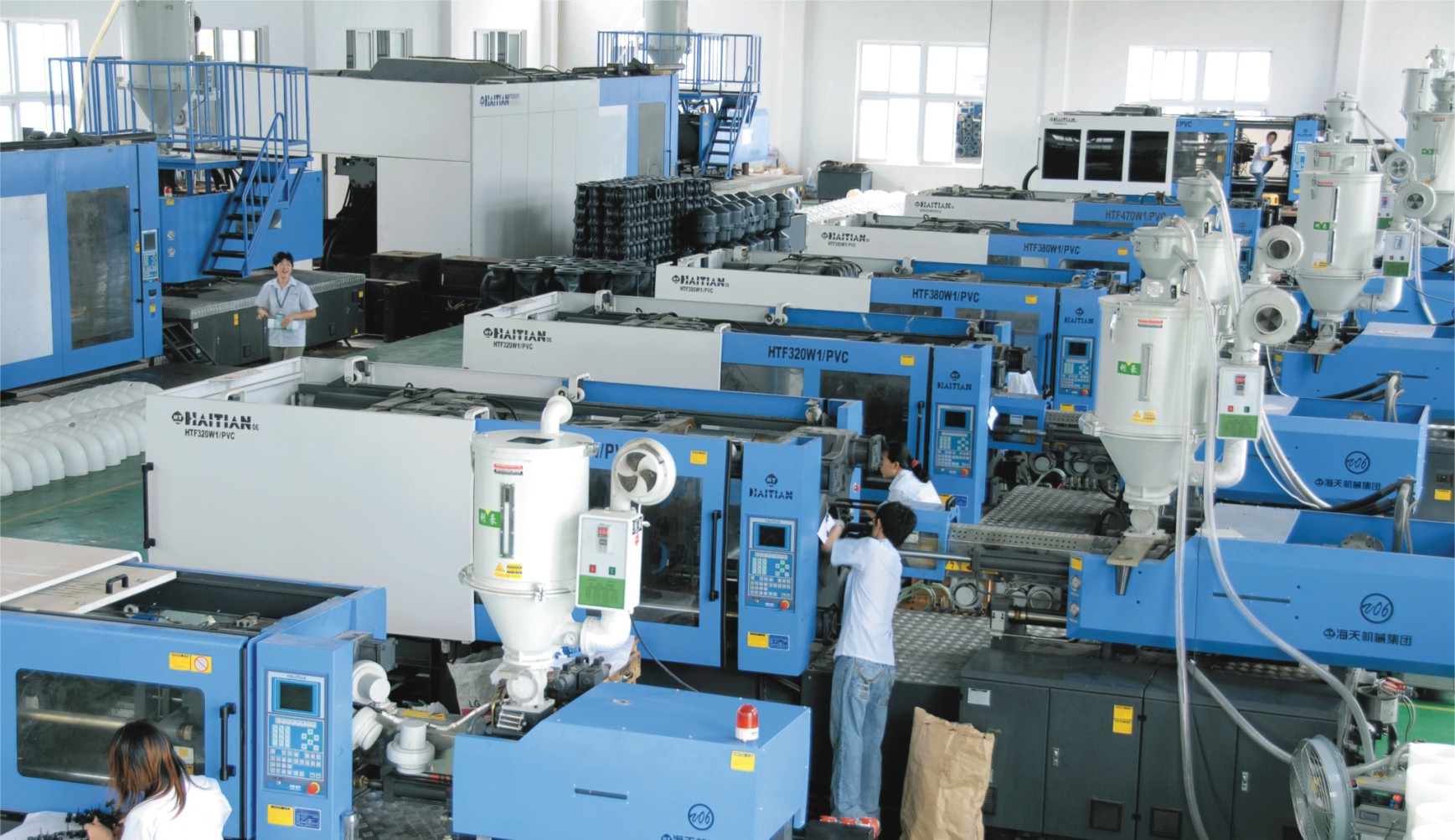
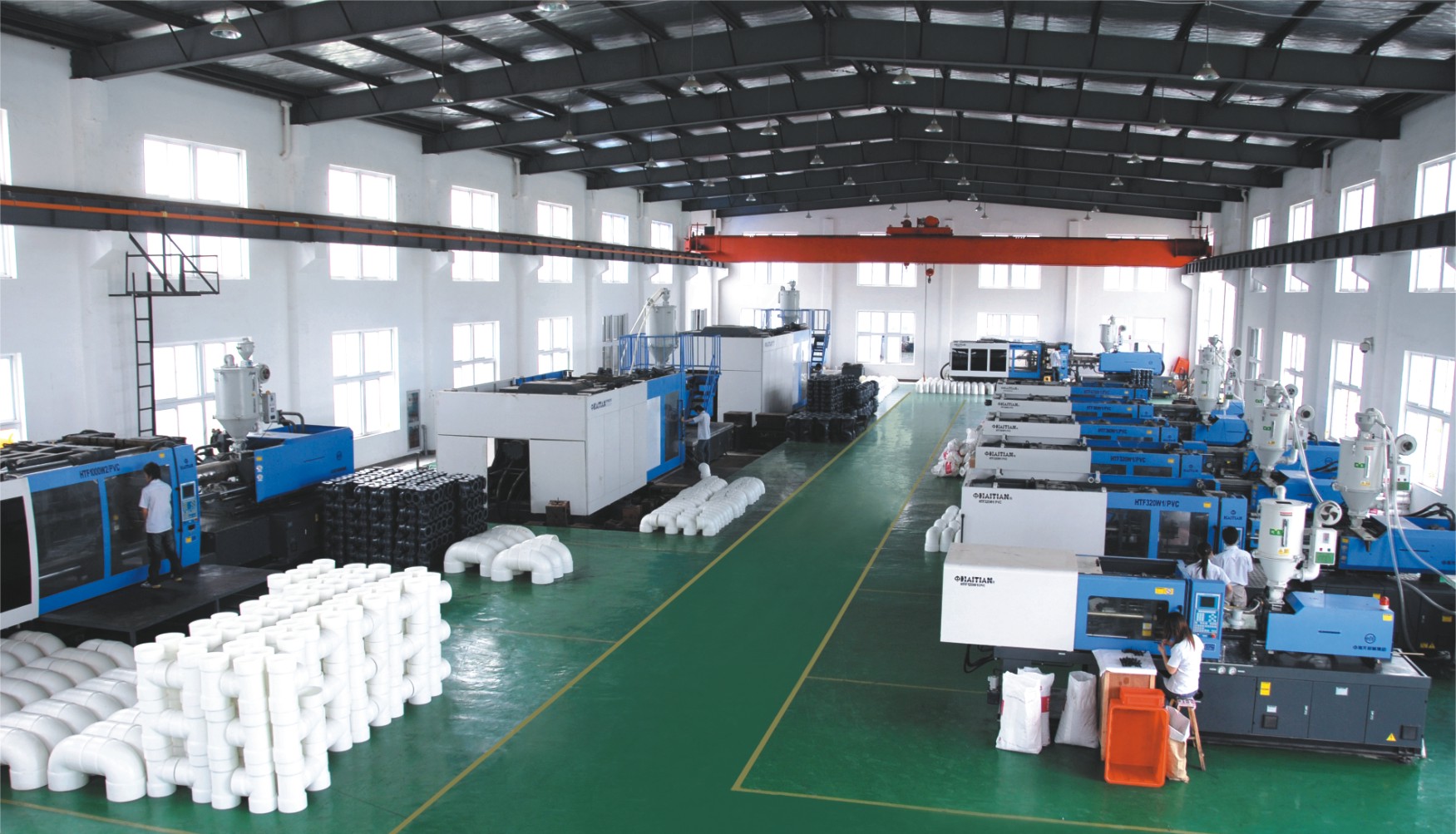
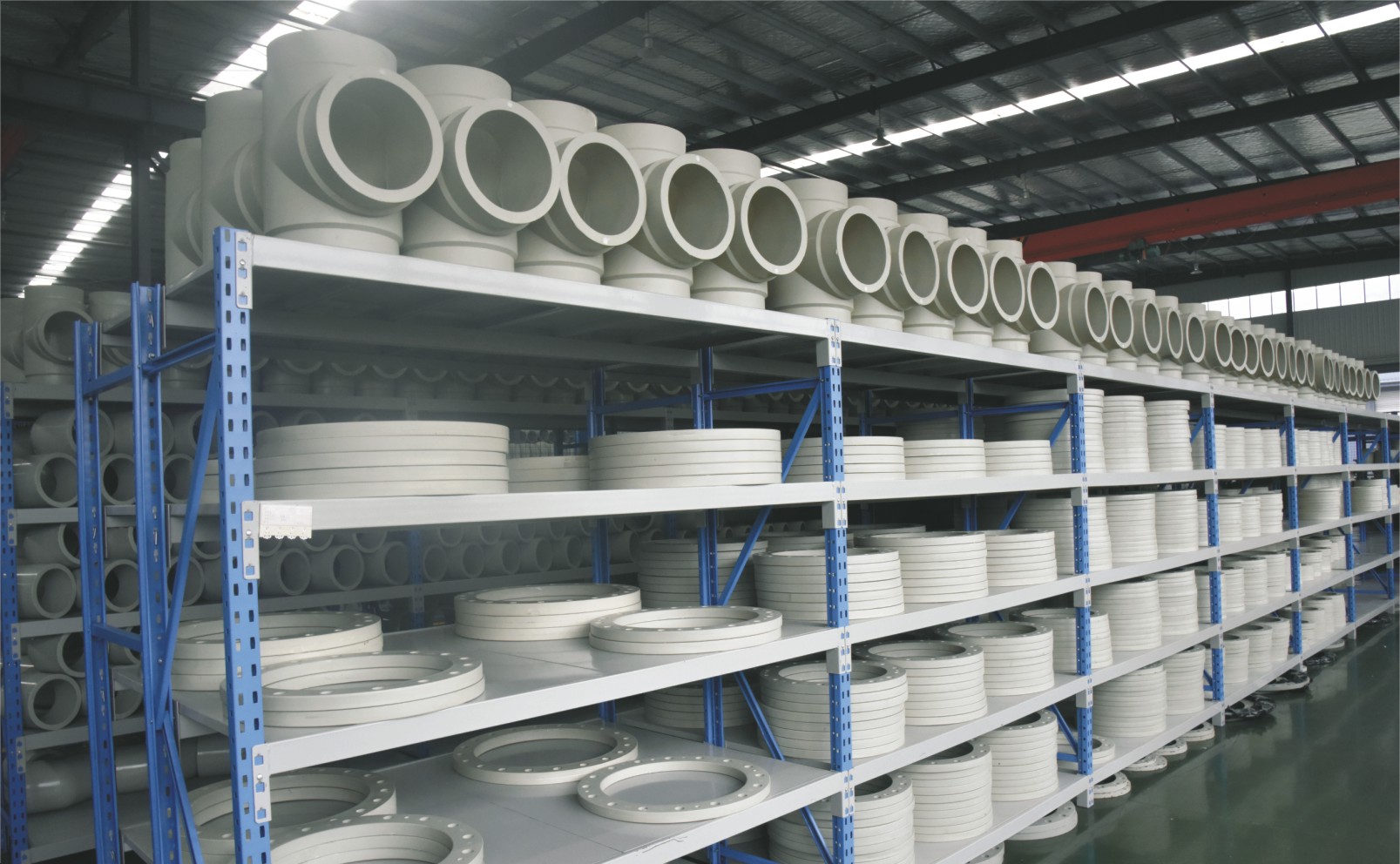
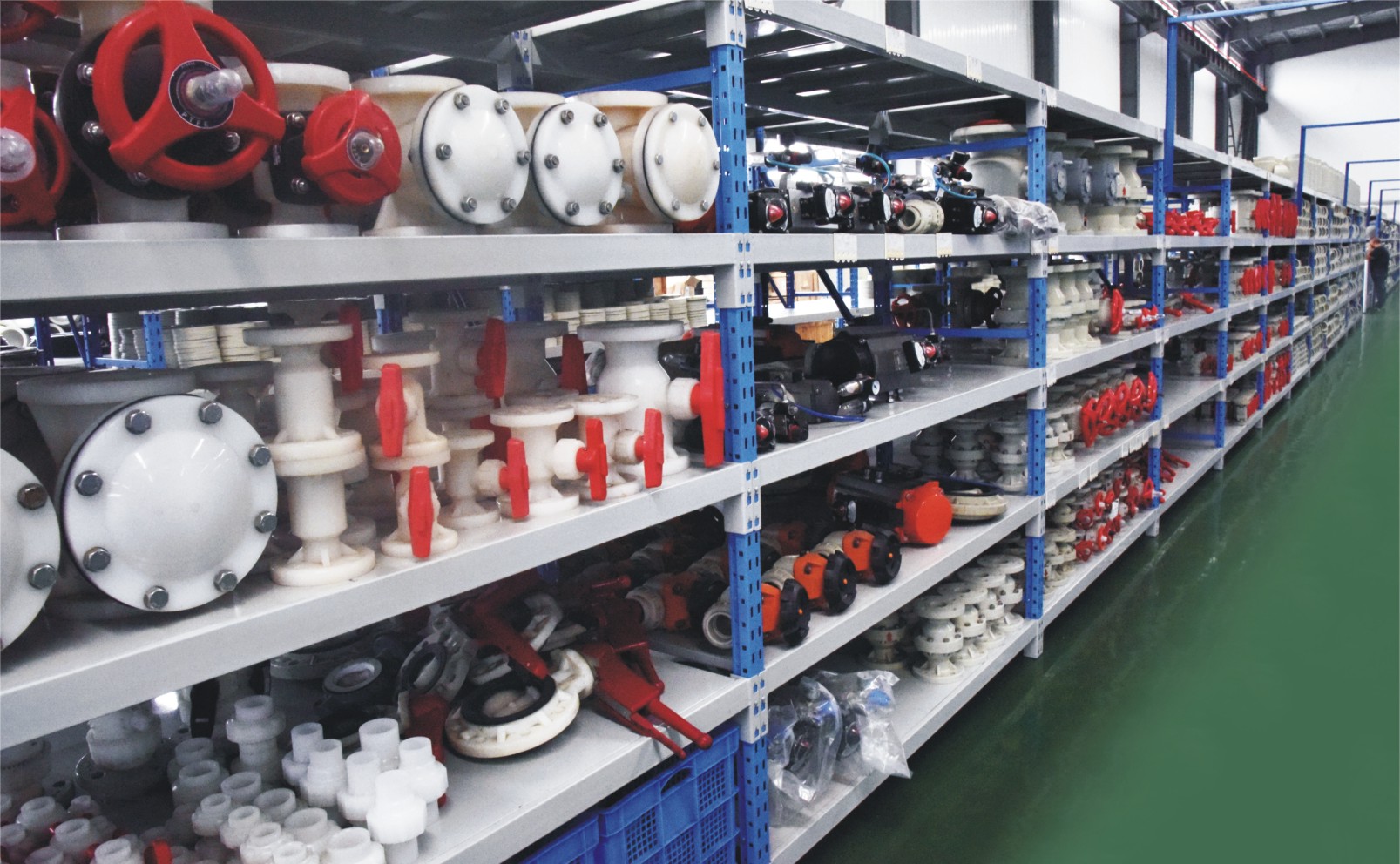
Factory Environment
Why Choose Us
Superior Quality
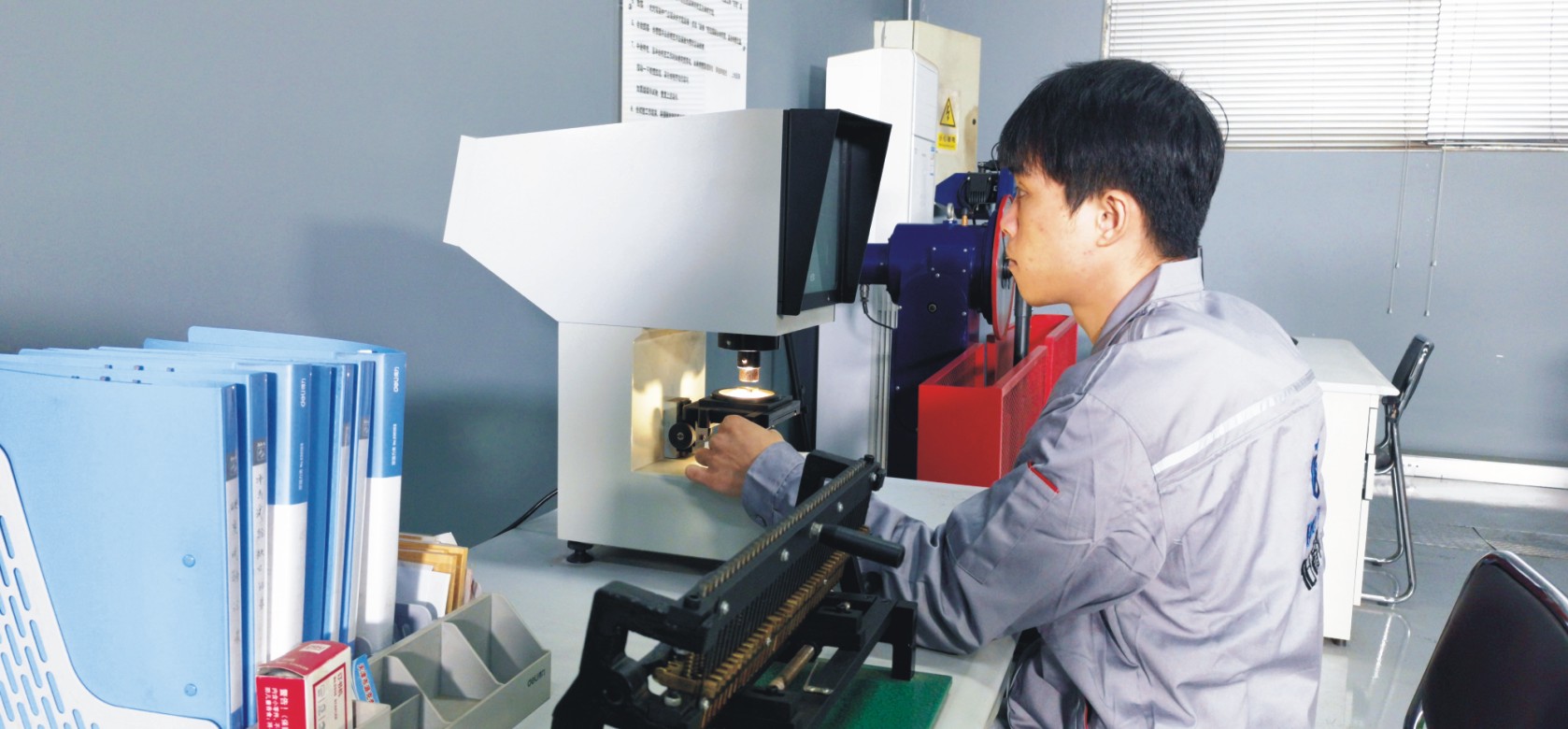
Our valves are produced from high-grade materials and subjected to strict quality inspections to guarantee dependable performance in challenging industrial environments.
Advanced Technology
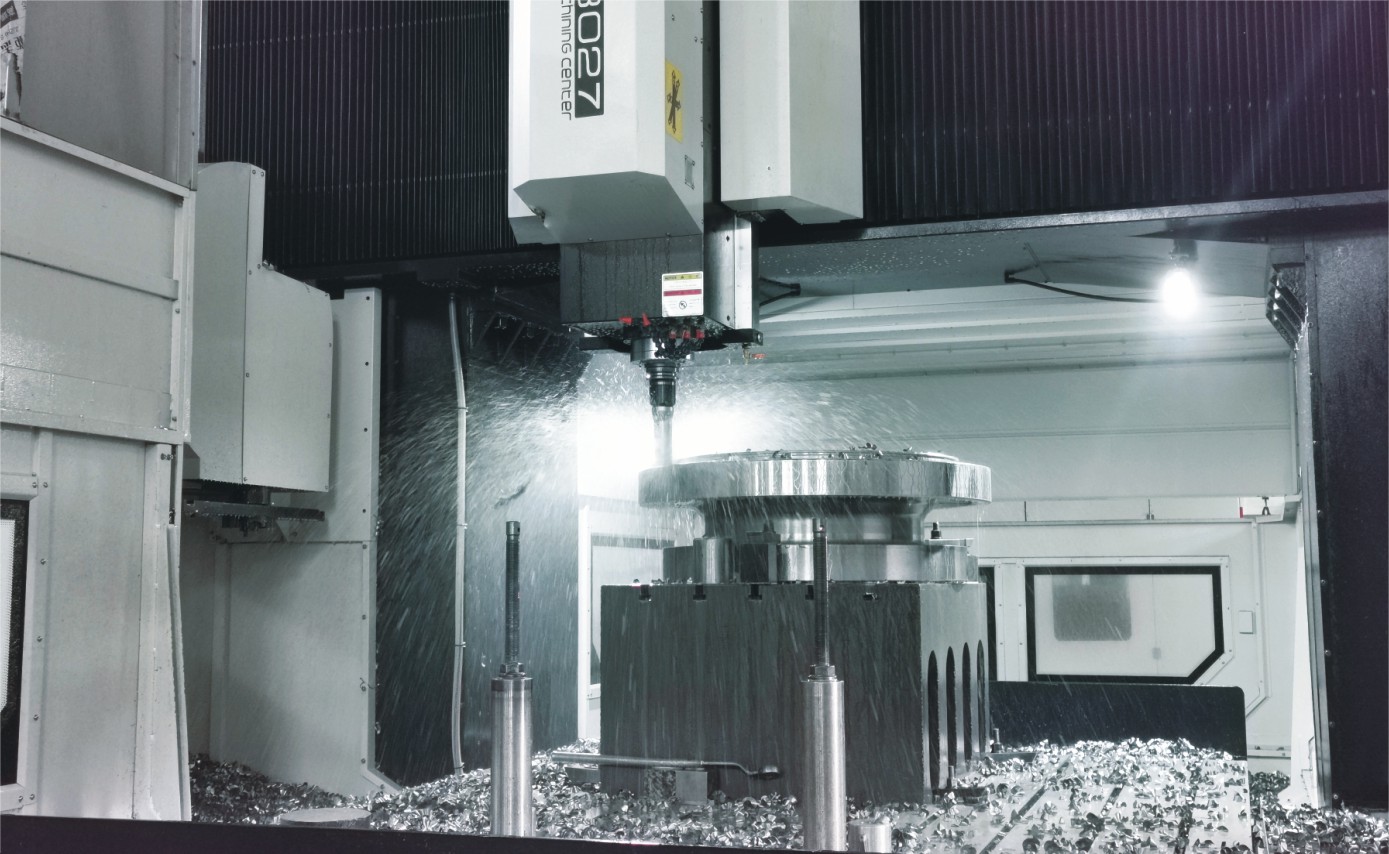
With cutting-edge CNC machining systems and high-precision manufacturing equipment, we ensure valves are made with outstanding accuracy and uniformity.
Competitive Pricing
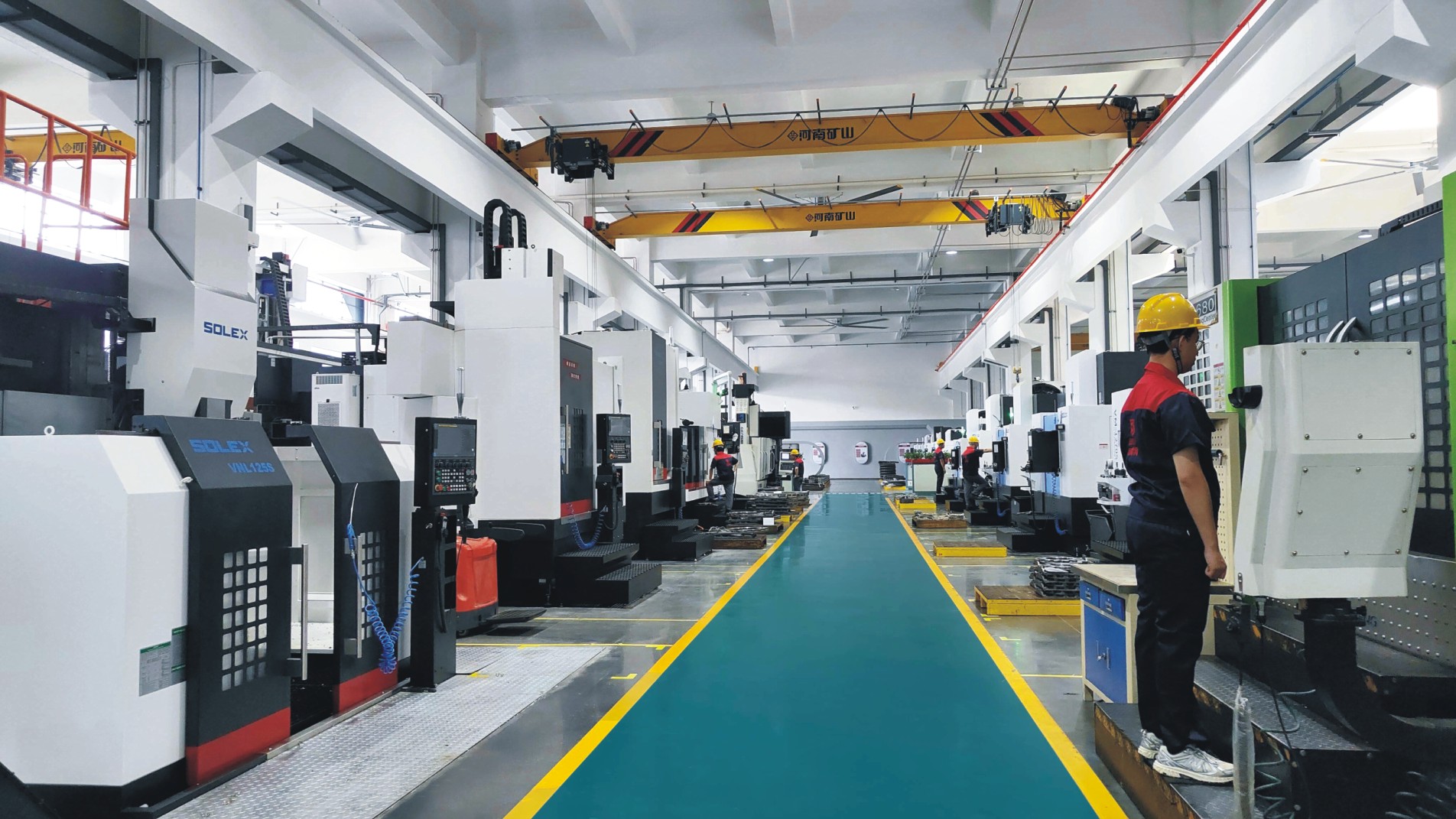
By streamlining production processes and sourcing materials in bulk, we provide premium-quality valves at competitive prices while maintaining excellent standards.
Expert Support
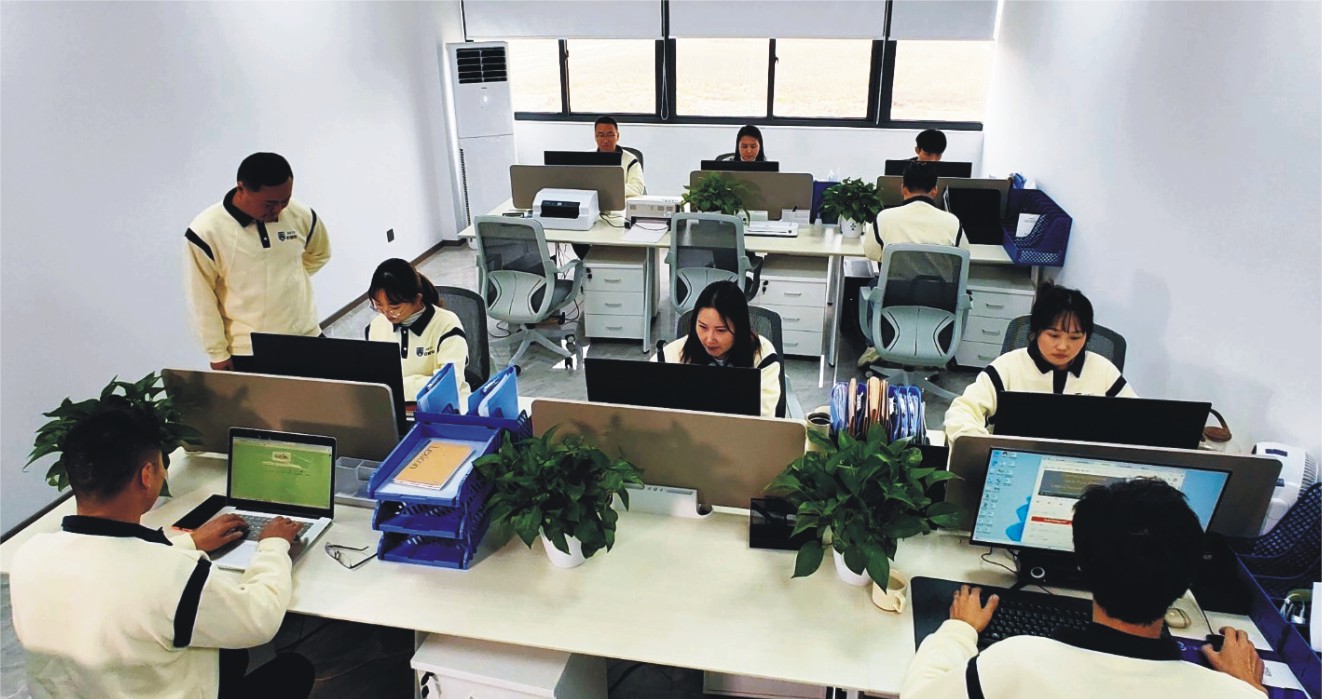
Our skilled technical team offers full support from product selection through after-sales service, helping ensure the best valve performance for your application.