Application Temperature Range Table
| Materials | Medium Temperature (°C) |
|---|
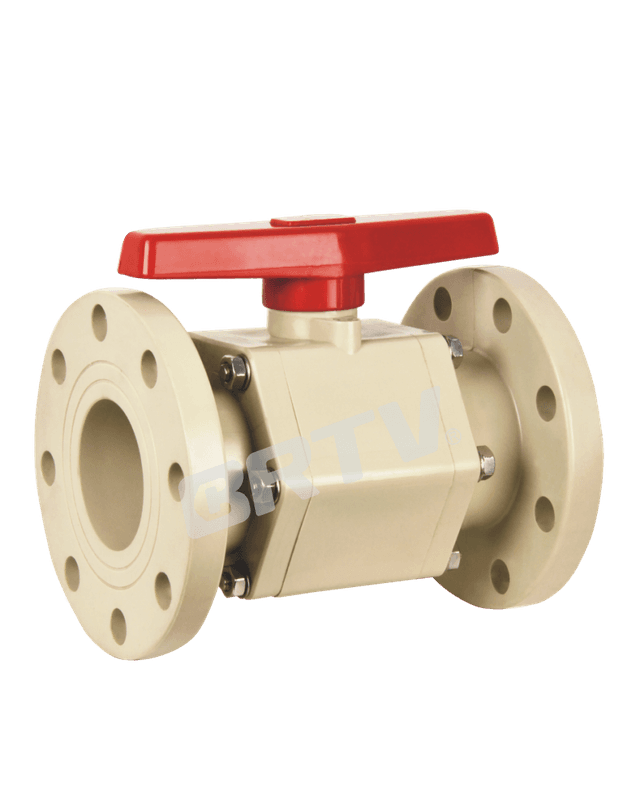
| RPP (Reinforced Polypropylene) | -14°C ~ +90°C |
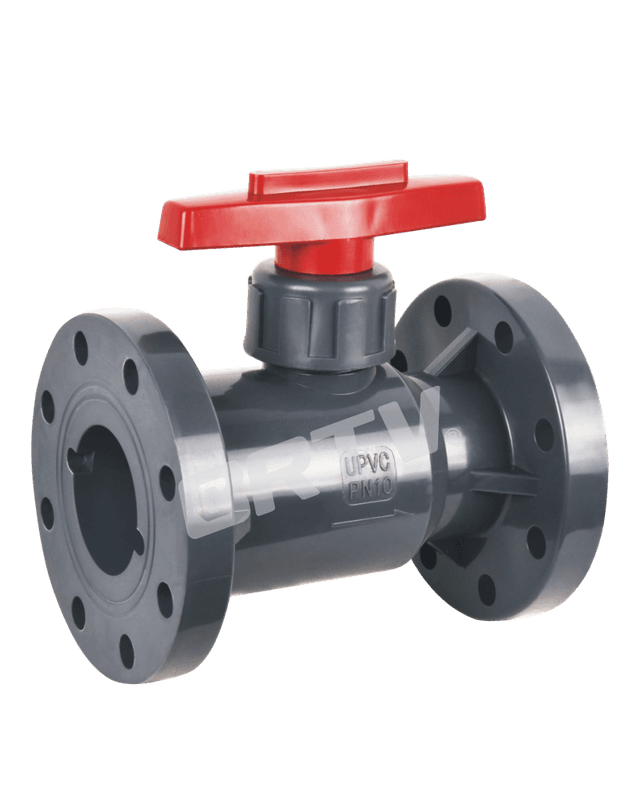
| UPVC (Unplasticized Polyvinyl Chloride) | -10°C ~ +70°C |
| PVDF (Polyvinylidene Fluoride) | -40°C ~ +140°C |
| CPVC (Chlorinated Polyvinyl Chloride) | -40°C ~ +95°C |
Features
• Full-bore design; PN10 is suitable for FRPP and PPH materials.
• Compact structure, easy installation, and high cost-effectiveness.
• Please close the valve before installation.
• DN15–50 uses rubber pads instead of internal plugs; valve torque and sealing can be adjusted via the external nut.
• Existing cases have shown that installation errors and other factors in factory pipelines can easily cause excessive stress on union nuts, leading to valve leakage or even damage. Therefore, it is not recommended to use union-type connection valves for specifications above DN50.
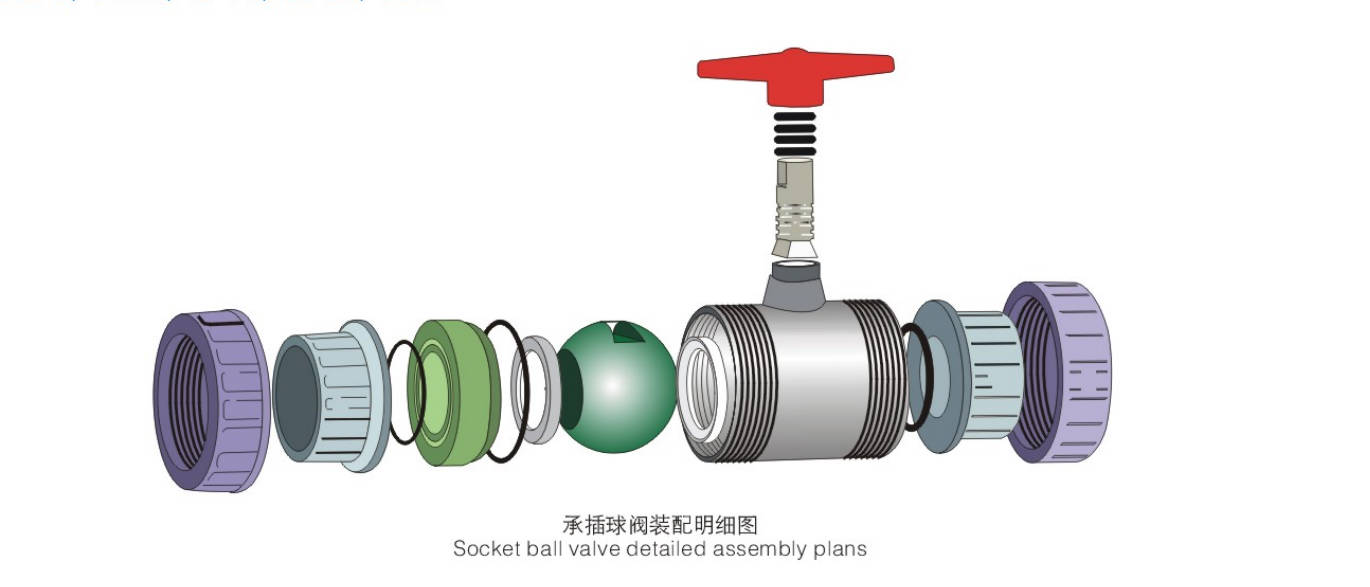
Parts & Material
| No. | Parts | Materials |
|---|
| 1 | Stem | FRPP, PPH |
| 2 | Handle | ABS |
| 3 | Union Nut | FRPP, PPH |
| 4 | Joints | FRPP, PPH |
| 5 | Body | FRPP, PPH |
| 6 | Ball | FRPP, PPH |
| 7 | Ball Seal | PTFE |
| 8 | Inside Plug | FRPP / PPH + EPDM |
| 9 | O-ring | EPDM |
| 10 | O-ring | EPDM |
| 11 | O-ring | EPDM |
| 12 | Stem O-ring | EPDM |
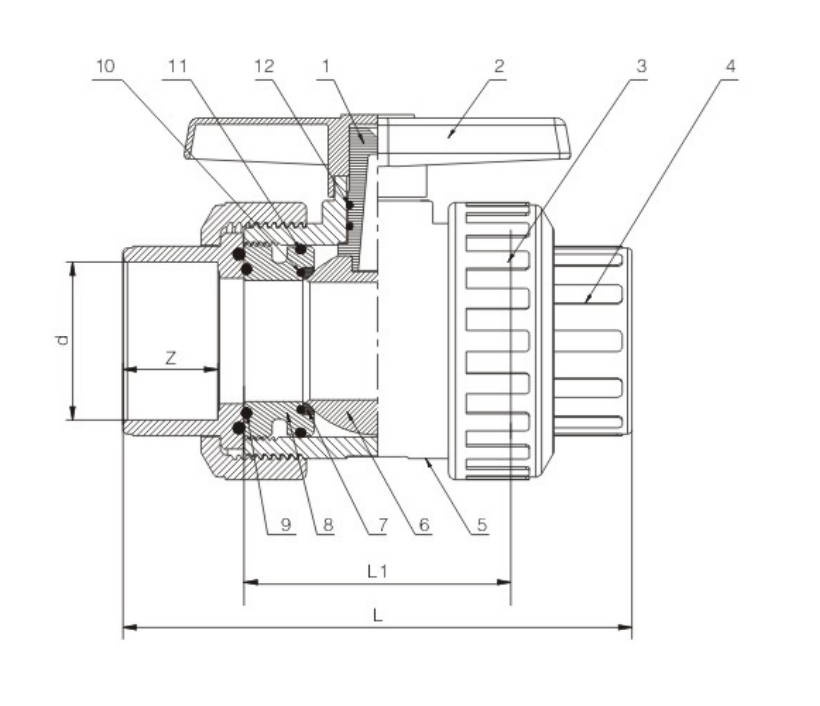
Dimensions Table
| DN | L1 | Socket End (HG/DIN) | Socket End (JIS) | Socket End (ANSI) | Thread End (HG/DIN) | Thread End (JIS) | Thread End (ANSI) | L | P | Working Pressure (FRPP/PPH) |
|---|
| 15 | 61 | 20 | 22 | 21.3 | Rc 1/2 | PT 1/2 | NPT 1/2 | 105 | 16 | 1.0 |
| 20 | 73 | 25 | 26 | 26.7 | Rc 3/4 | PT 3/4 | NPT 3/4 | 125 | 20 | 1.0 |
| 25 | 80 | 32 | 32 | 33.4 | Rc 1 | PT 1 | NPT 1 | 138 | 23 | 1.0 |
| 32 | 89 | 40 | 38 | 42.2 | Rc 1-1/4 | PT 1-1/4 | NPT 1-1/4 | 150 | 28 | 1.0 |
| 40 | 101 | 50 | 48 | 48.3 | Rc 1-1/2 | PT 1-1/2 | NPT 1/2 | 172 | 32 | 1.0 |
| 50 | 107 | 63 | 60 | 60.3 | Rc 2 | PT 2 | NPT 2 | 208 | 38 | 1.0 |
| 65 | 139 | 75 | 76 | 73 | Rc 2-1/2 | PT 2-1/2 | NPT 2-1/2 | 235 | 42 | 0.6 |
| 80 | 155 | 90 | 89 | 88.9 | Rc 3 | PT 3 | NPT 3 | 268 | 45 | 0.6 |
| 100 | 168 | 110 | 114 | 114.3 | Rc 4 | PT 4 | NPT 4 | 302 | 60 | 0.6 |
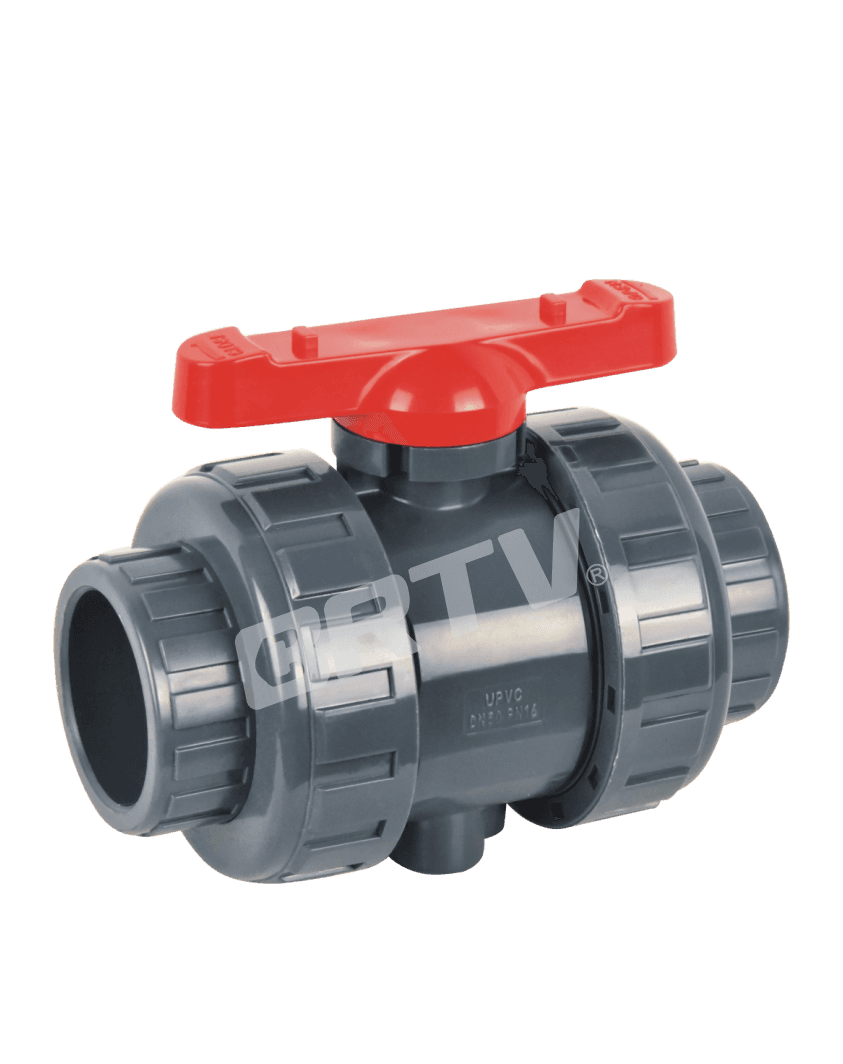
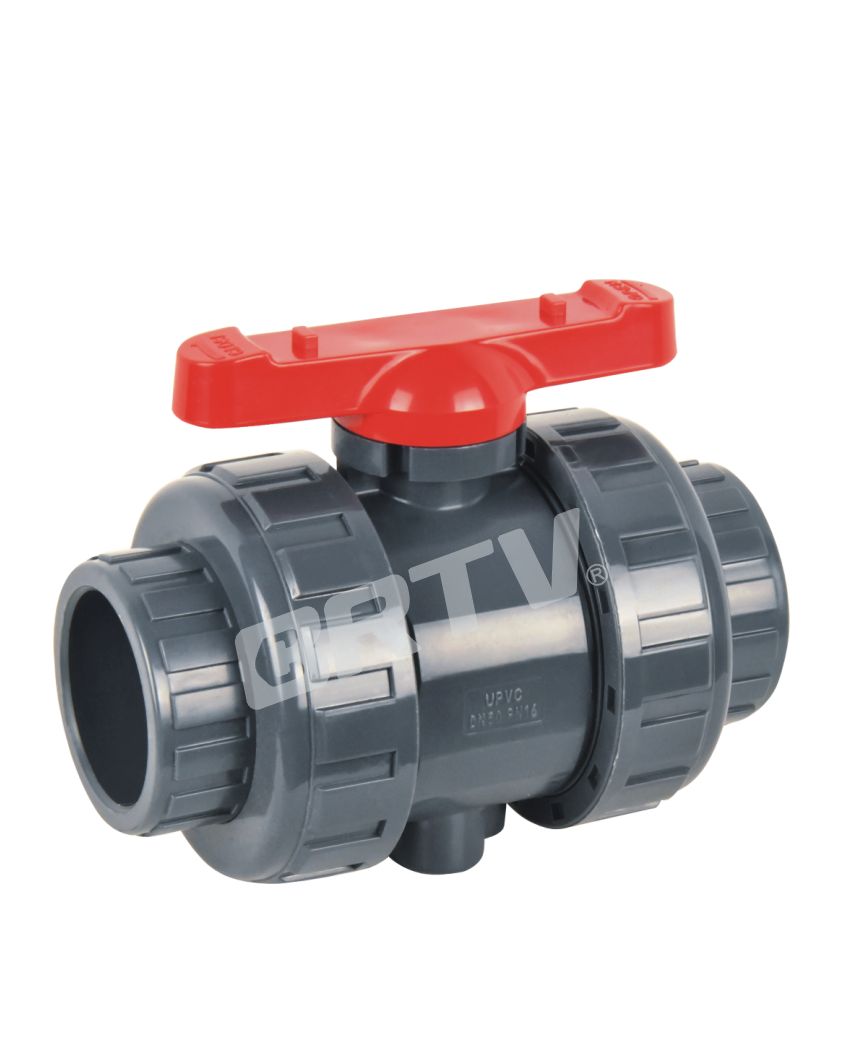
High Pressure True Union Ball Valve
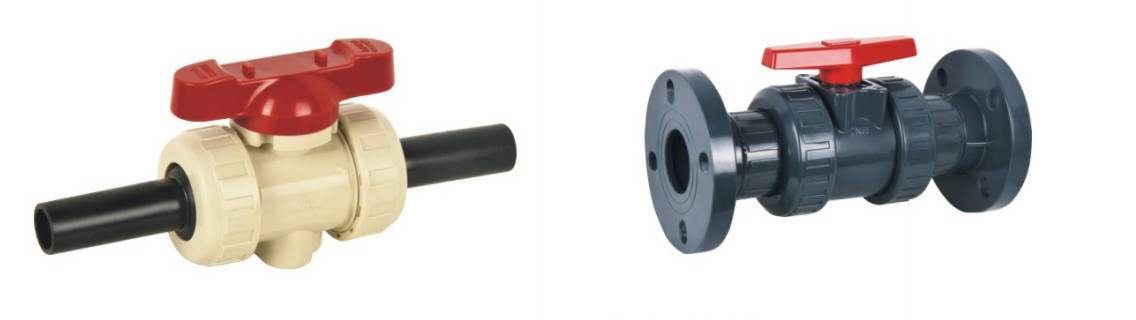
Features
• Full-bore design with thickened wall thickness; the minimum wall thickness of the valve body exceeds three times that of PVC pipes of the same specification (and twice that of PP pipes), providing excellent pressure resistance and suitability for harsh working conditions.
• The valve body length exceeds the design requirements of the Ministry of Chemical Industry. The longer structure allows for thicker spherical walls, thicker PTFE seals, stronger internal plugs, and reinforced threads.
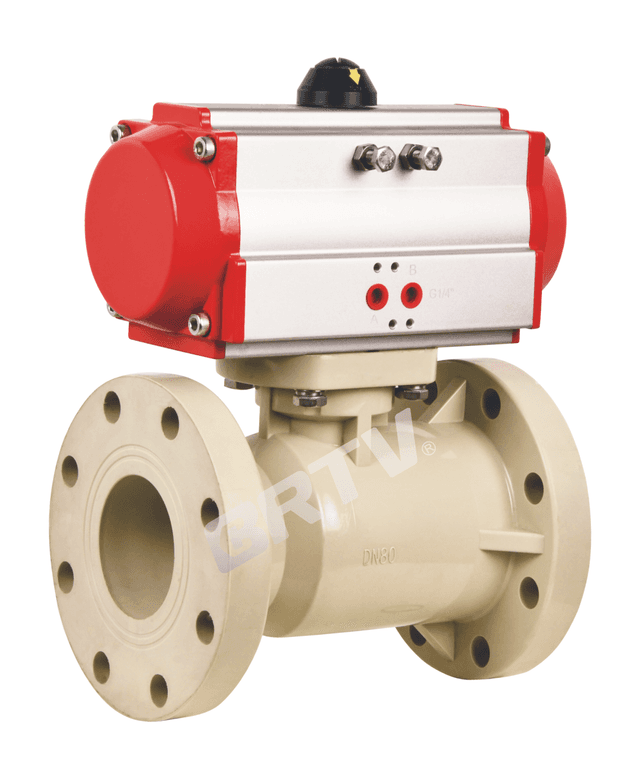
• Equipped with a built-in connection platform, enabling easy conversion from manual to automatic operation without replacing the valve.
• Insertion holes are provided at the bottom for easy installation.
• The handle can be disassembled, making valve maintenance more convenient.
• Existing cases have shown that installation errors and other factors in factory pipelines can easily cause excessive stress on union nuts, leading to valve leakage or even damage. Therefore, it is not recommended to use articulated (union-type) connection structures for valves with specifications DN50 and above.
Parts & Material
| No. | Parts | Materials |
|---|
| 1 | Joints | PPH, UPVC, CPVC, PVDF |
| 2 | Union Nut | PPH, UPVC, CPVC, PVDF |
| 3 | Body | PPH, UPVC, CPVC, PVDF |
| 4 | Seat Seal | EPDM / FPM + PTFE |
| 5 | Ball | PPH, UPVC, CPVC, PVDF |
| 6 | Inside Plug | PPH, UPVC, CPVC, PVDF |
| 7 | Stem | PPH, UPVC, CPVC, PVDF |
| 8 | Handle | ABS |
| 9 | Stem O-ring | EPDM, FPM |
| 10 | O-ring | EPDM, FPM |
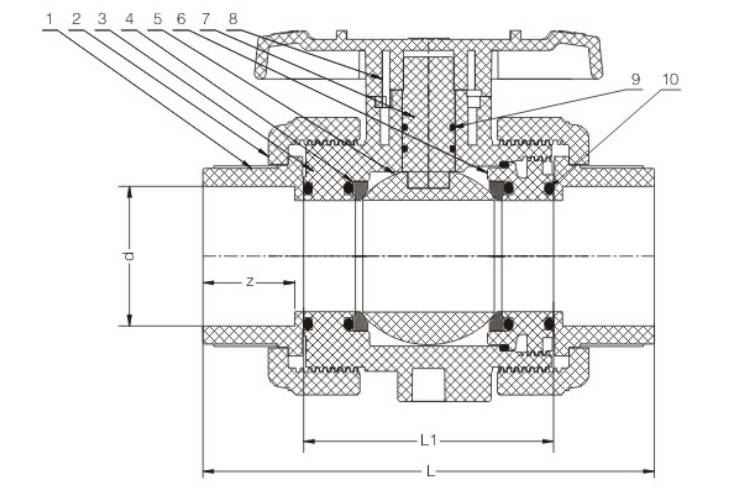
Dimensions Table
| DN | Socket End (HG/DIN) | Socket End (JIS) | Socket End (ANSI) | Thread End (HG/DIN) | Thread End (JIS) | Thread End (ANSI) | Z | L | L1 | Minimum Valve Thickness | Working Pressure (PPH) | Working Pressure (UPVC/CPVC) | Working Pressure (PVDF) |
|---|
| 15 | 20 | 22 | 21.3 | Rc 1/2 | PT 1/2 | NPT 1/2 | 18 | 108 | 62 | 5.5 | 1.0 | 1.6 | 1.6 |
| 20 | 25 | 26 | 26.7 | Rc 3/4 | PT 3/4 | NPT 3/4 | 22 | 125 | 69 | 7.0 | 1.0 | 1.6 | 1.6 |
| 25 | 32 | 32 | 33.4 | Rc 1 | PT 1 | NPT 1 | 27 | 138 | 76 | 7.5 | 1.0 | 1.6 | 1.6 |
| 32 | 40 | 38 | 42.2 | Rc 1-1/4 | PT 1-1/4 | NPT 1-1/4 | 30 | 160 | 85 | 9.0 | 1.0 | 1.6 | 1.6 |
| 40 | 50 | 48 | 48.3 | Rc 1-1/2 | PT 1-1/2 | NPT 1-1/2 | 35 | 177 | 92 | 10.0 | 1.0 | 1.6 | 1.6 |
| 50 | 63 | 60 | 60.3 | Rc 2 | PT 2 | NPT 2 | 40 | 206 | 113 | 11.4 | 1.0 | 1.6 | 1.6 |
| 65 | 75 | 76 | 73 | Rc 2-1/2 | PT 2-1/2 | NPT 2-1/2 | 51 | 265 | 135 | 11.5 | 1.0 | 1.0 | 1.0 |
| 80 | 90 | 89 | 88.9 | Rc 3 | PT 3 | NPT 3 | 52 | 295 | 154 | 12.5 | 1.0 | 1.0 | 1.0 |
| 100 | 110 | 114 | 114.3 | Rc 4 | PT 4 | NPT 4 | 60 | 330 | 175 | 13.0 | 1.0 | 1.0 | 1.0 |
Advantage
• Combines the advantages of flange-type ball valves and is compatible with various types of actuators.
• Four-hole positioning with bolt and nut connection offers higher strength and stability compared to double-hole positioning or self-tapping screw fixing.
• Enables easy conversion from manual to automatic operation without replacing the valve.
• The connection platform uses FRPP (PPG) material, stainless steel fasteners, and flange connections (optional stainless steel sleeves), making installation easy and providing strong corrosion resistance.
Ball Valve Torque Reference Table
| Size (DN) | Safety Torque |
|---|
| 15 | ≤10 |
| 20 | ≤10 |
| 25 | ≤10 |
| 32 | 12 |
| 40 | 15 |
| 50 | 20 |
| 65 | 40 |
| 80 | 45 |
| 100 | 65 |
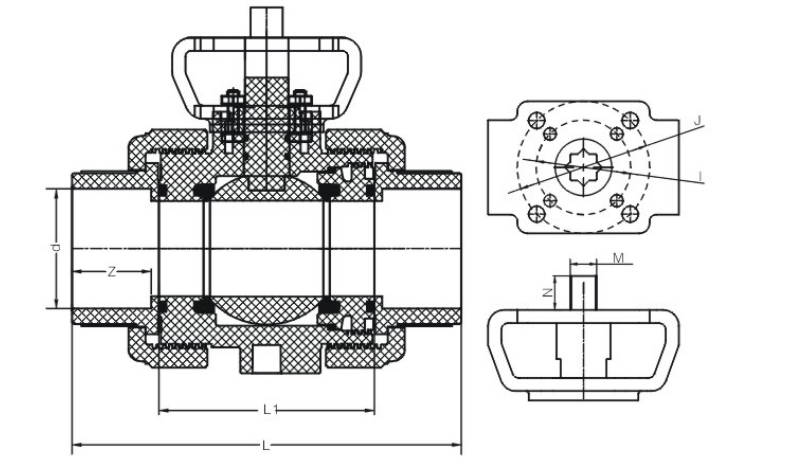
Dimension Table
| DN | D (HG/DIN) | D (JIS) | D (ANSI) | Thread (HG/DIN) | Thread (JIS) | Thread (ANSI) | P | L | L1 | Working Pressure FRPP/PPH | UPVC/CPVC | PVDF | I | J | M | N |
|---|
| 15 | 20 | 22 | 21.3 | Rc1/2 | PT1/2 | NPT1/2 | 18 | 108 | 62 | 1.0 | 1.6 | 1.6 | 36 | 50 | 11 | 14 |
| 20 | 25 | 26 | 26.7 | Rc3/4 | PT3/4 | NPT3/4 | 22 | 125 | 69 | 1.0 | 1.6 | 1.6 | 36 | 50 | 11 | 14 |
| 25 | 32 | 32 | 33.4 | Rc1 | PT1 | NPT1 | 27 | 138 | 76 | 1.0 | 1.6 | 1.6 | 36 | 50 | 11 | 14 |
| 32 | 40 | 38 | 42.2 | Rc1-1/4 | PT1-1/4 | NPT1-1/4 | 30 | 160 | 85 | 1.0 | 1.6 | 1.6 | 50 | 70 | 11/14* | 14 |
| 40 | 50 | 48 | 48.3 | Rc1-1/2 | PT1-1/2 | NPT1-1/2 | 35 | 177 | 92 | 1.0 | 1.6 | 1.6 | 50 | 70 | 14 | 17 |
| 50 | 63 | 60 | 60.3 | Rc2 | PT2 | NPT2 | 40 | 206 | 113 | 1.0 | 1.6 | 1.6 | 50 | 70 | 14 | 17 |
| 65 | 75 | 76 | 73 | Rc2-1/2 | PT2-1/2 | NPT2-1/2 | 51 | 265 | 135 | 1.0 | 1.0 | 1.0 | 70 | 102 | 17 | 21 |
| 80 | 90 | 89 | 88.9 | Rc3 | PT3 | NPT3 | 52 | 295 | 154 | 1.0 | 1.0 | 1.0 | 70 | 102 | 17/22 | 21 |
| 100 | 110 | 114 | 114.3 | Rc4 | PT4 | NPT4 | 60 | 330 | 175 | 1.0 | 1.0 | 1.0 | 70 | 102 | 17/22 | 24 |
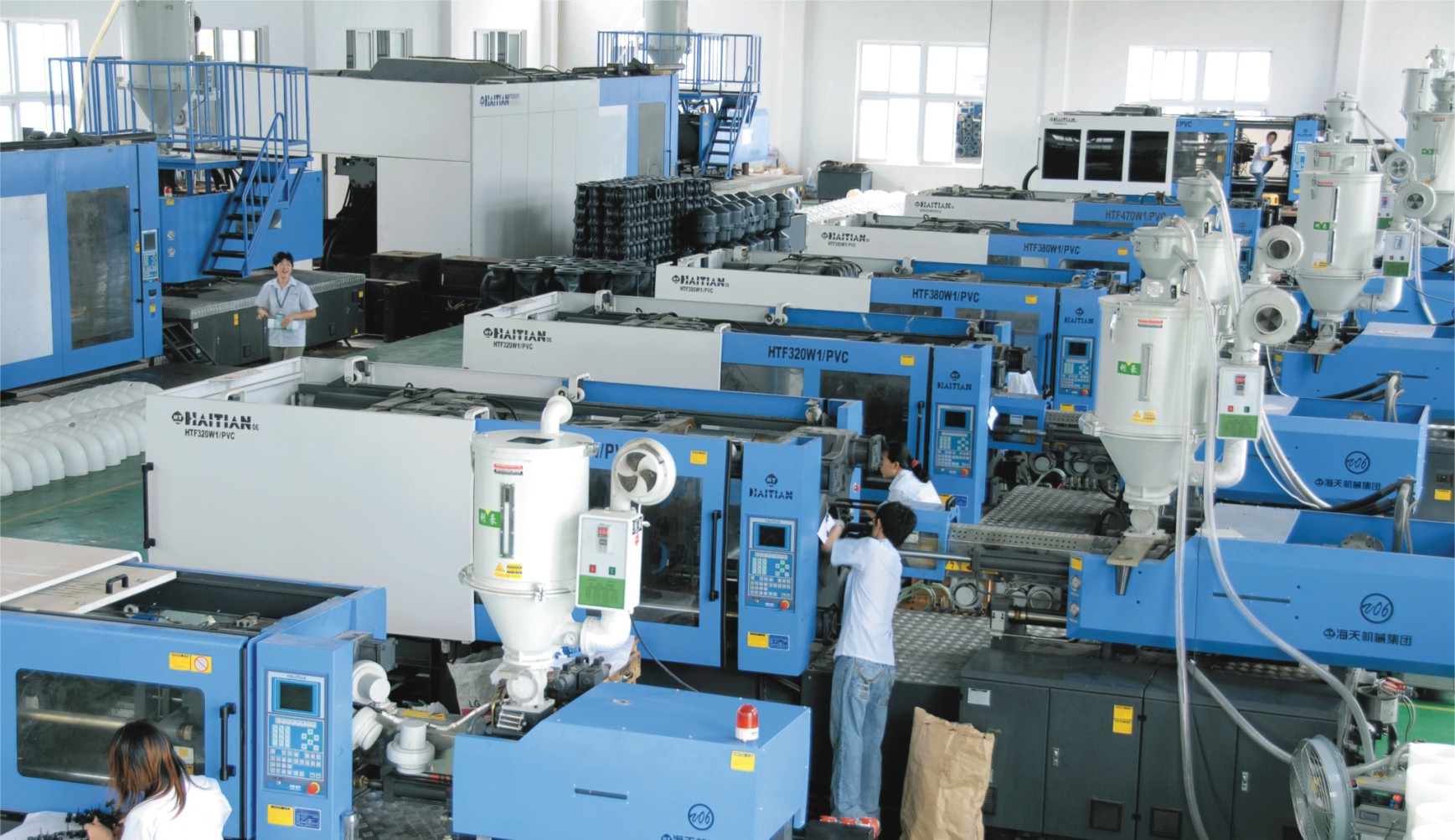
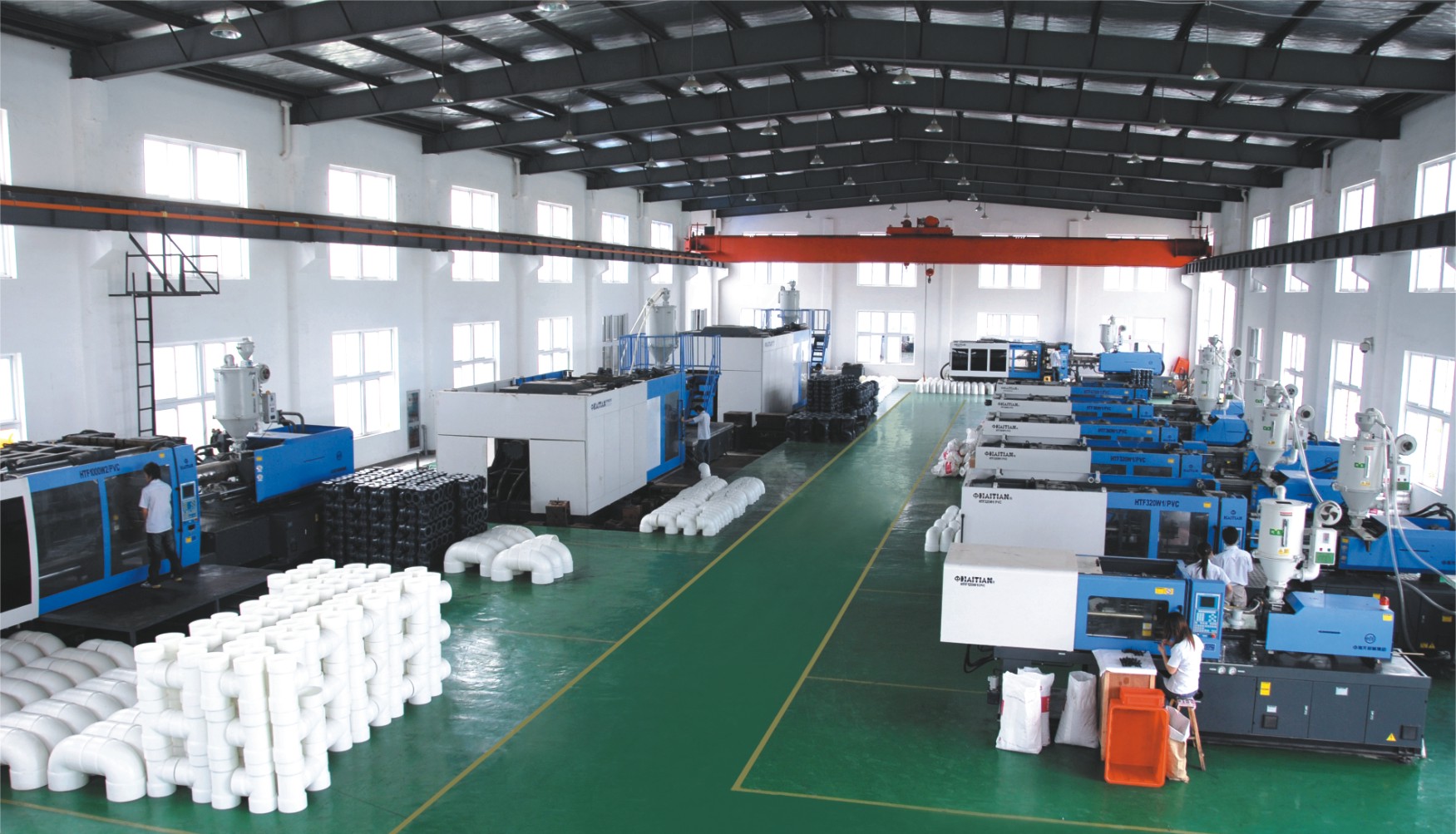
Manufacturing Process
Step 1: Order and Design
Design specifications are confirmed based on customer requirements (dimensions, pressure rating, connection type, materials such as PVC, CPVC, PP, etc.), clarifying the structural features of the true union ball valve (double union design, removable for maintenance). Drawings, mold designs, and technical parameters are finalized.
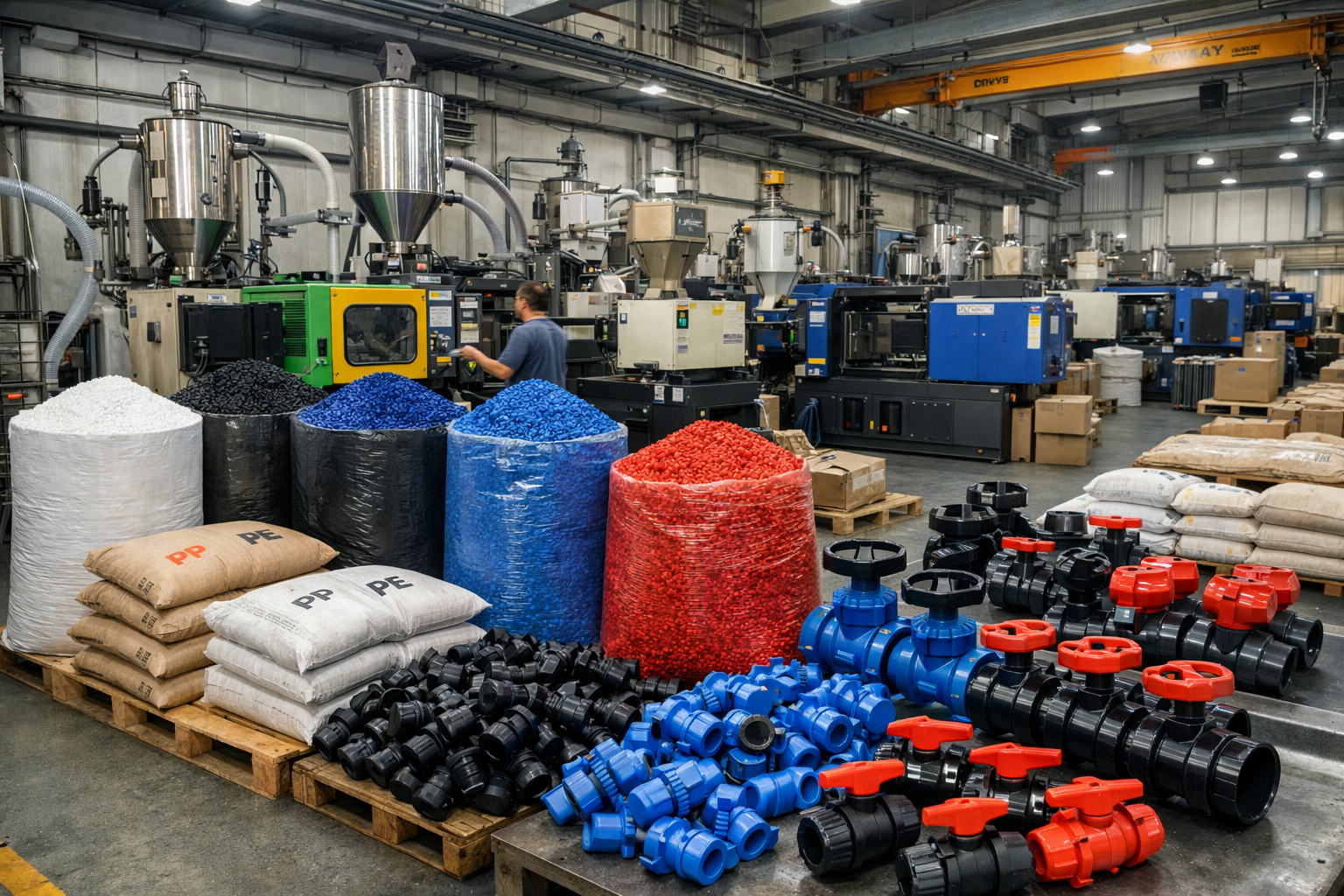
Step 2: Raw Material Preparation & Molding
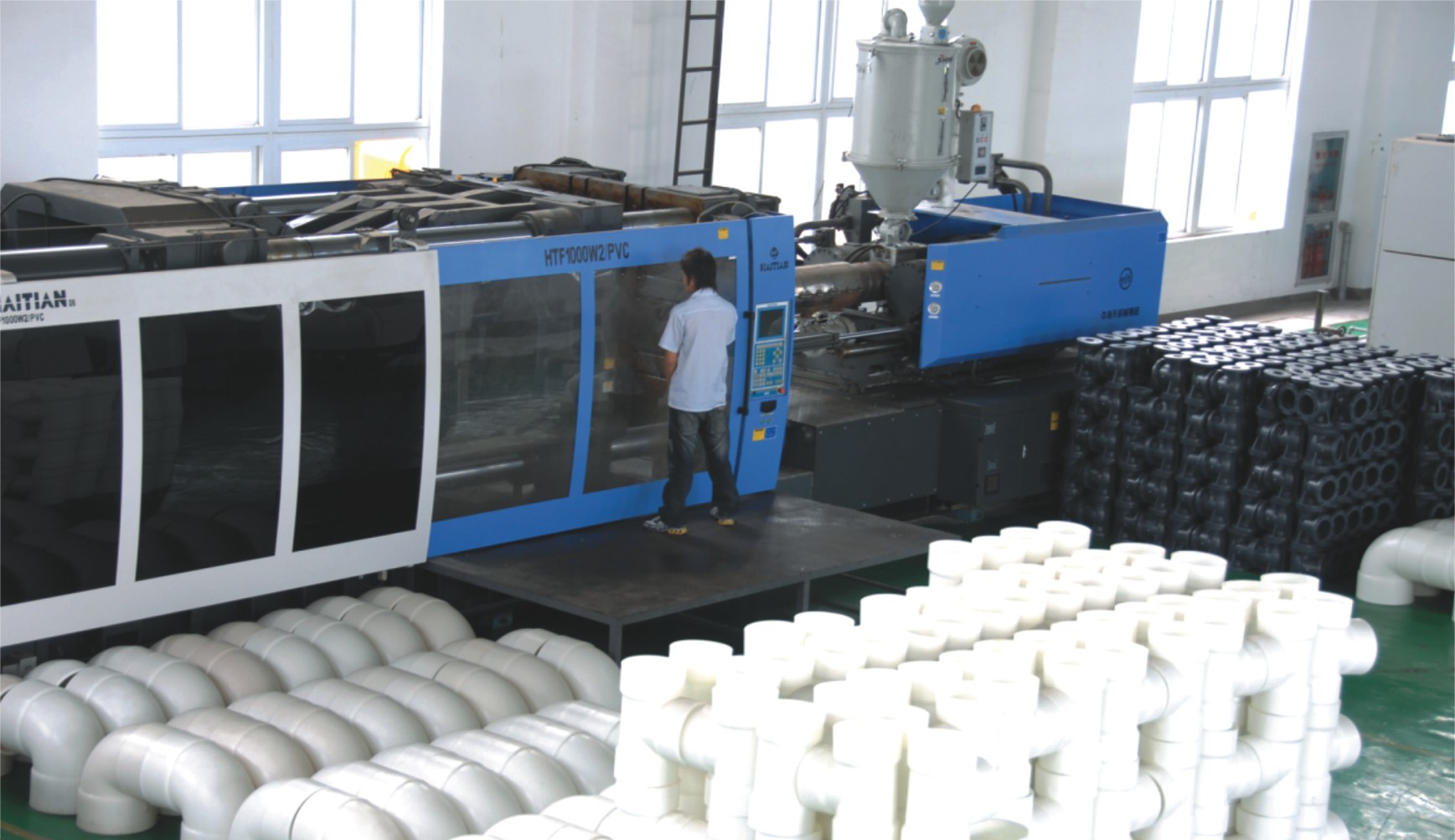
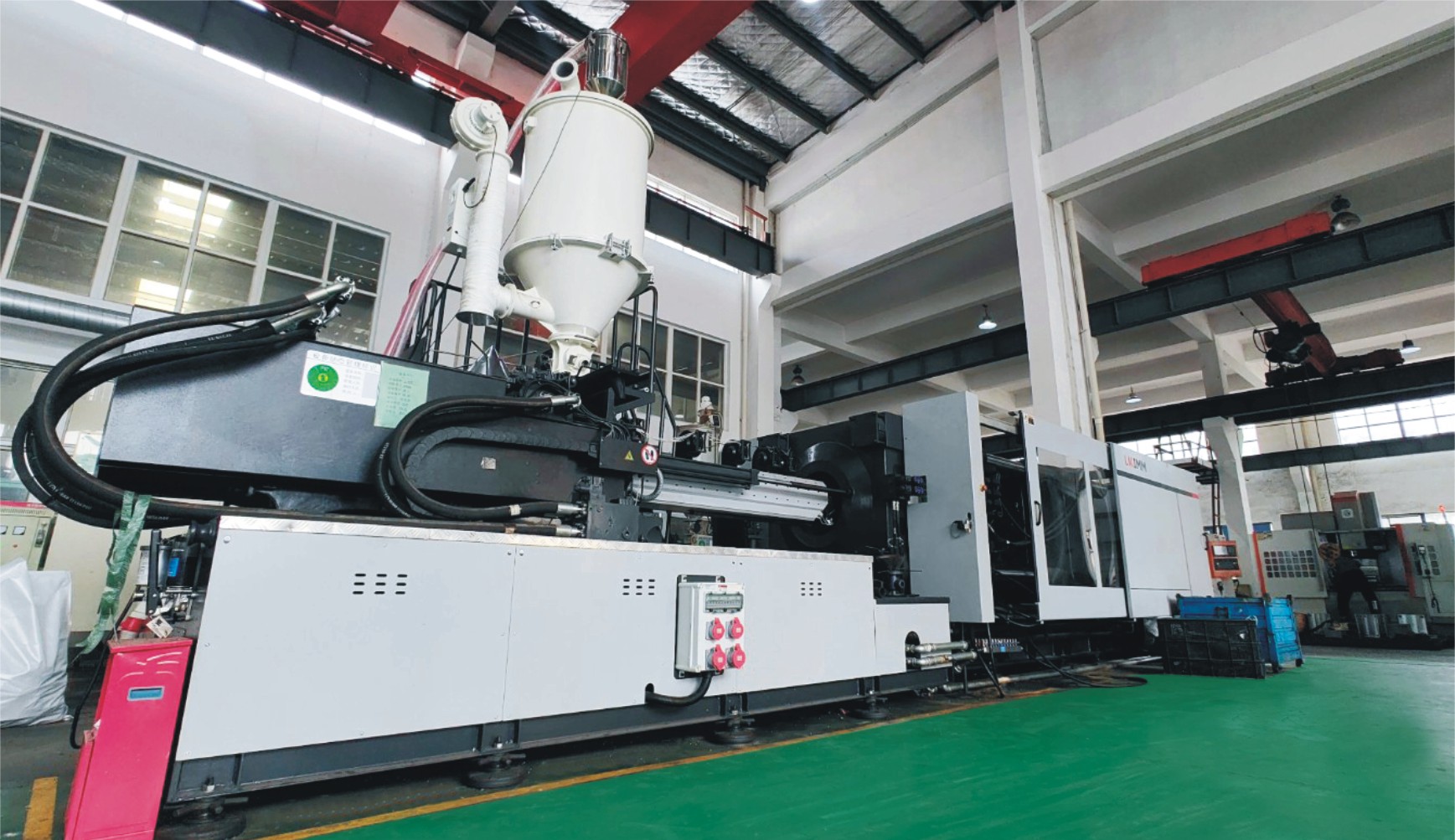
Select high-quality thermoplastic raw materials (such as PVC or CPVC). After drying, produce the main components of the true union ball valve (valve body, ball, union nuts, handle, etc.) using injection molding processes to ensure dimensional stability and surface quality.
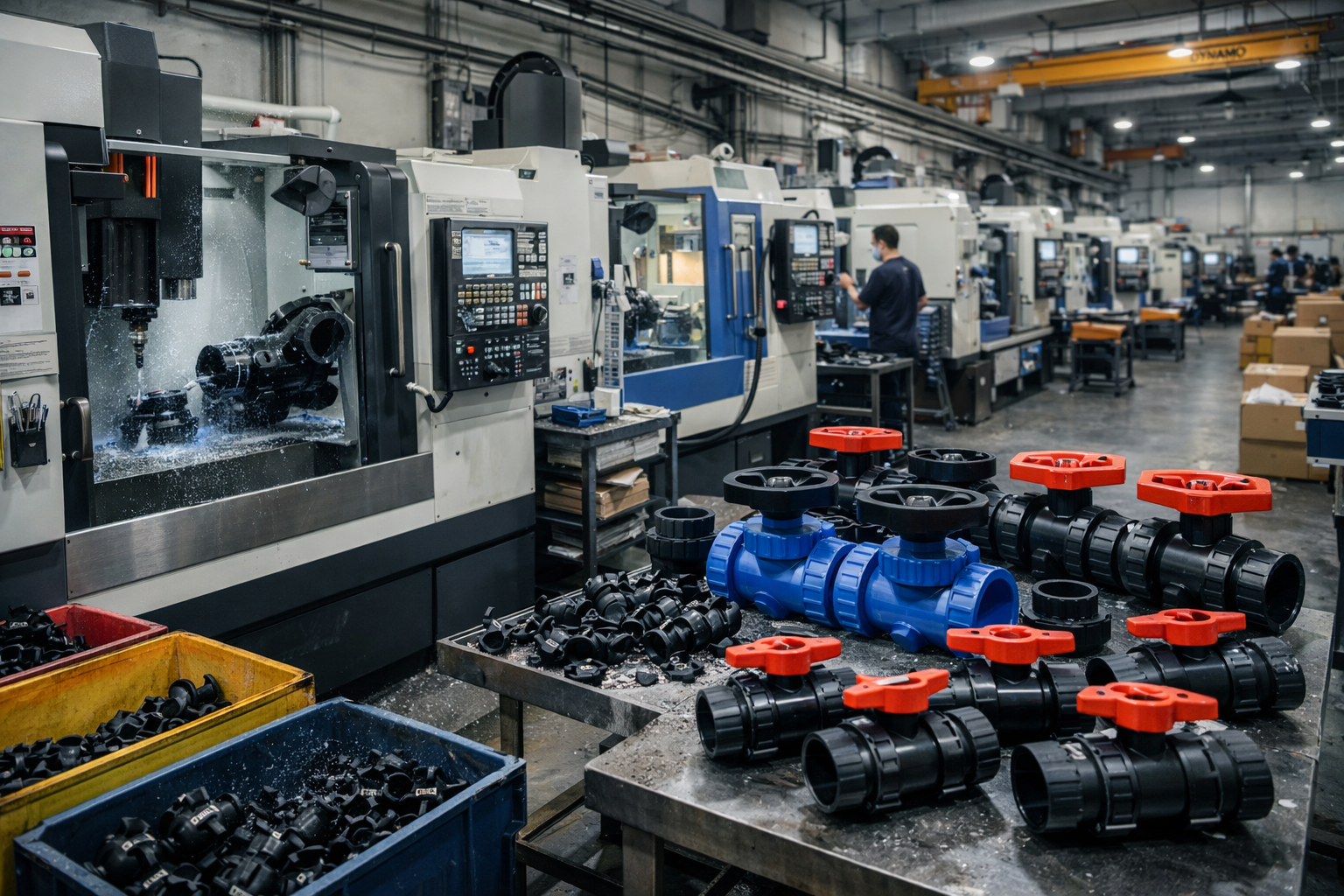
Step 3: Machining
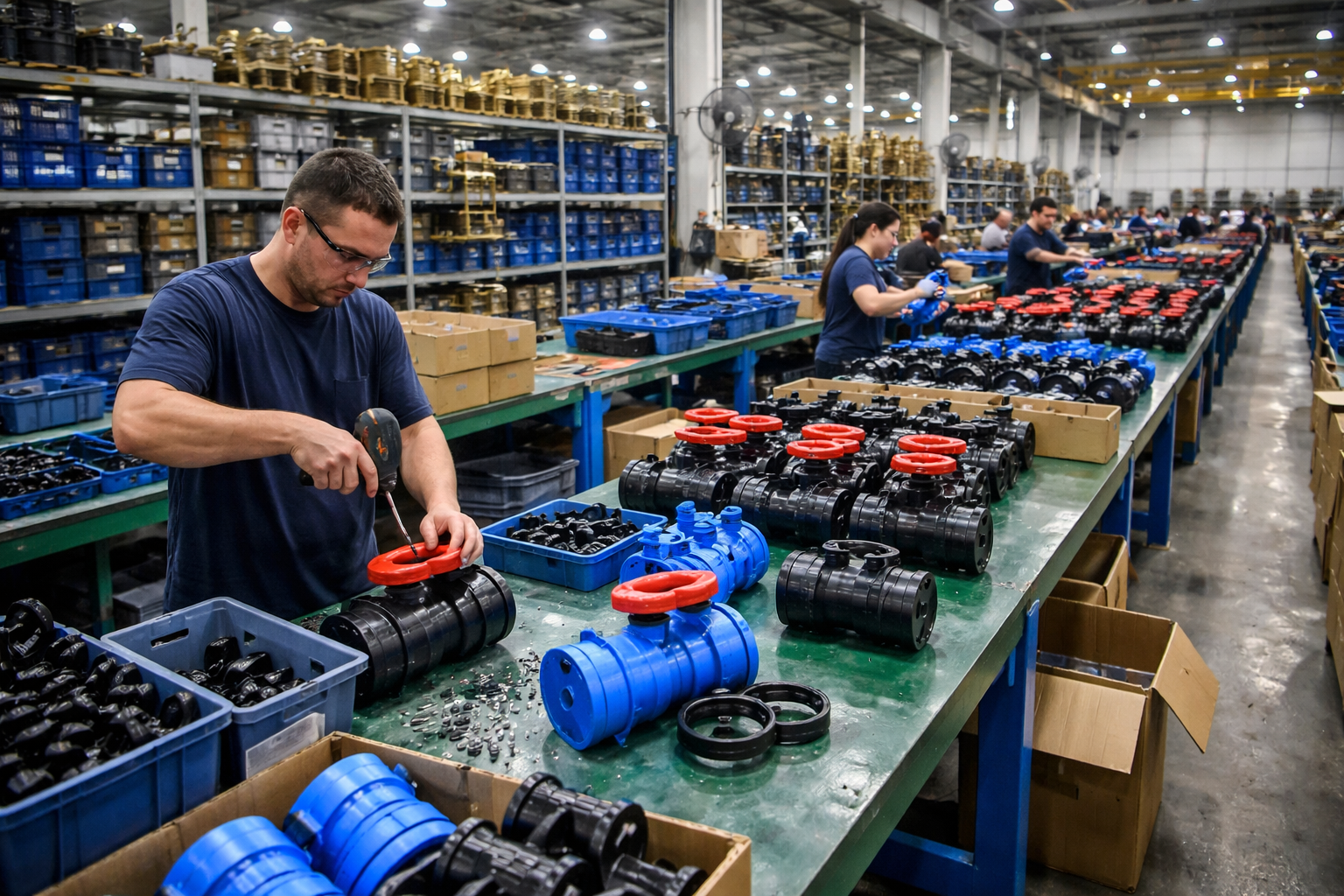
Perform precision machining on the injection-molded true union ball valve components, including sealing surface finishing, threading, and calibration of critical fit dimensions, to ensure the sealing performance between the ball and seat and smooth operation.
Step 4: Assembly
Sealing components such as the ball, seat, and O-rings are installed into the valve body, followed by the fitting nut and handle, to complete the assembly of the true union ball valve. Torque and assembly precision must be strictly controlled during this process to ensure smooth opening and closing.
Step 5: Testing & Quality Assurance
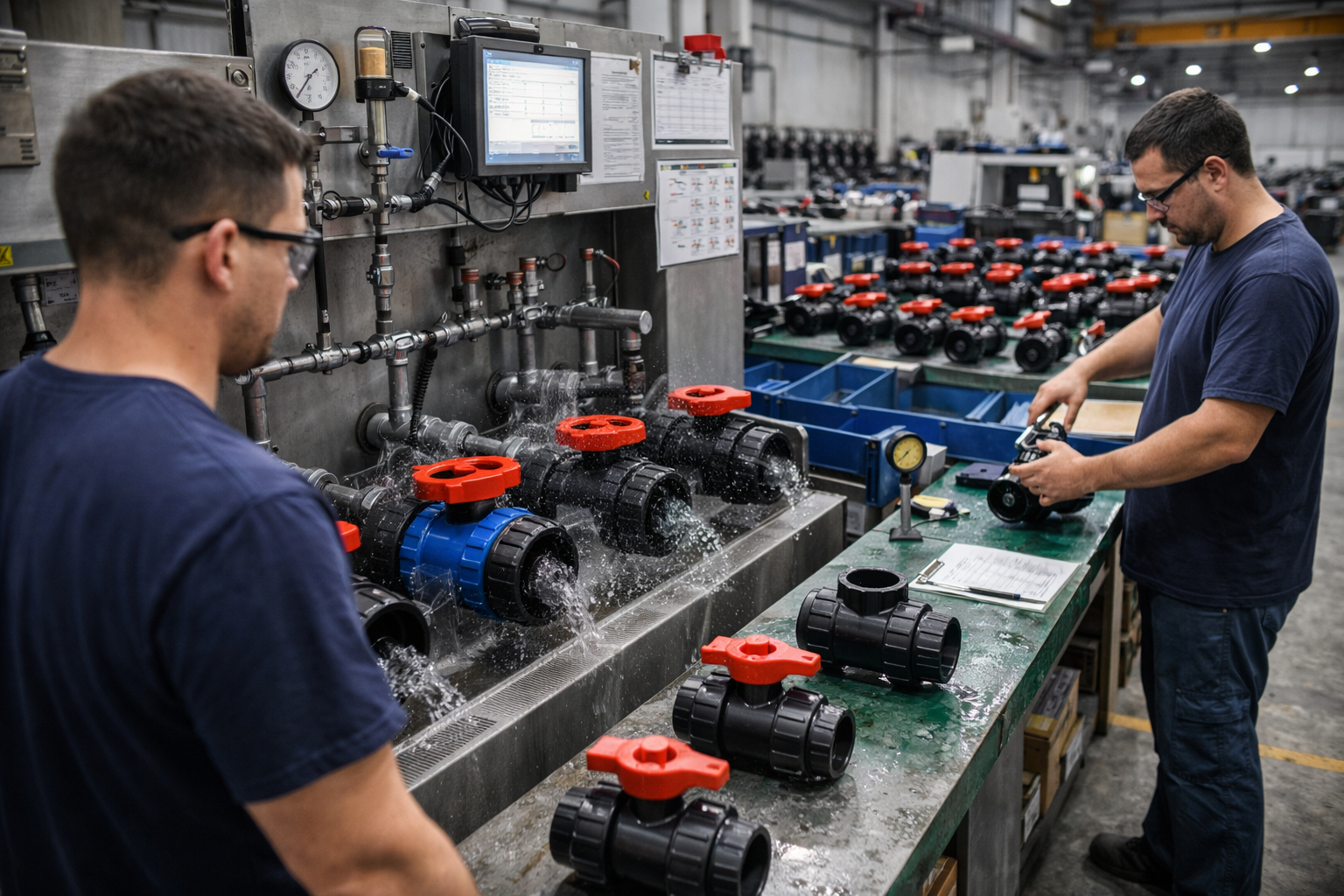
The fully assembled true union ball valve undergoes pressure testing, seal testing, and cycle life testing to ensure leak-free operation, reliability, and compliance with relevant standards (such as ISO, ASTM, etc.).
Step 6: Finishing, Packaging and Shipment
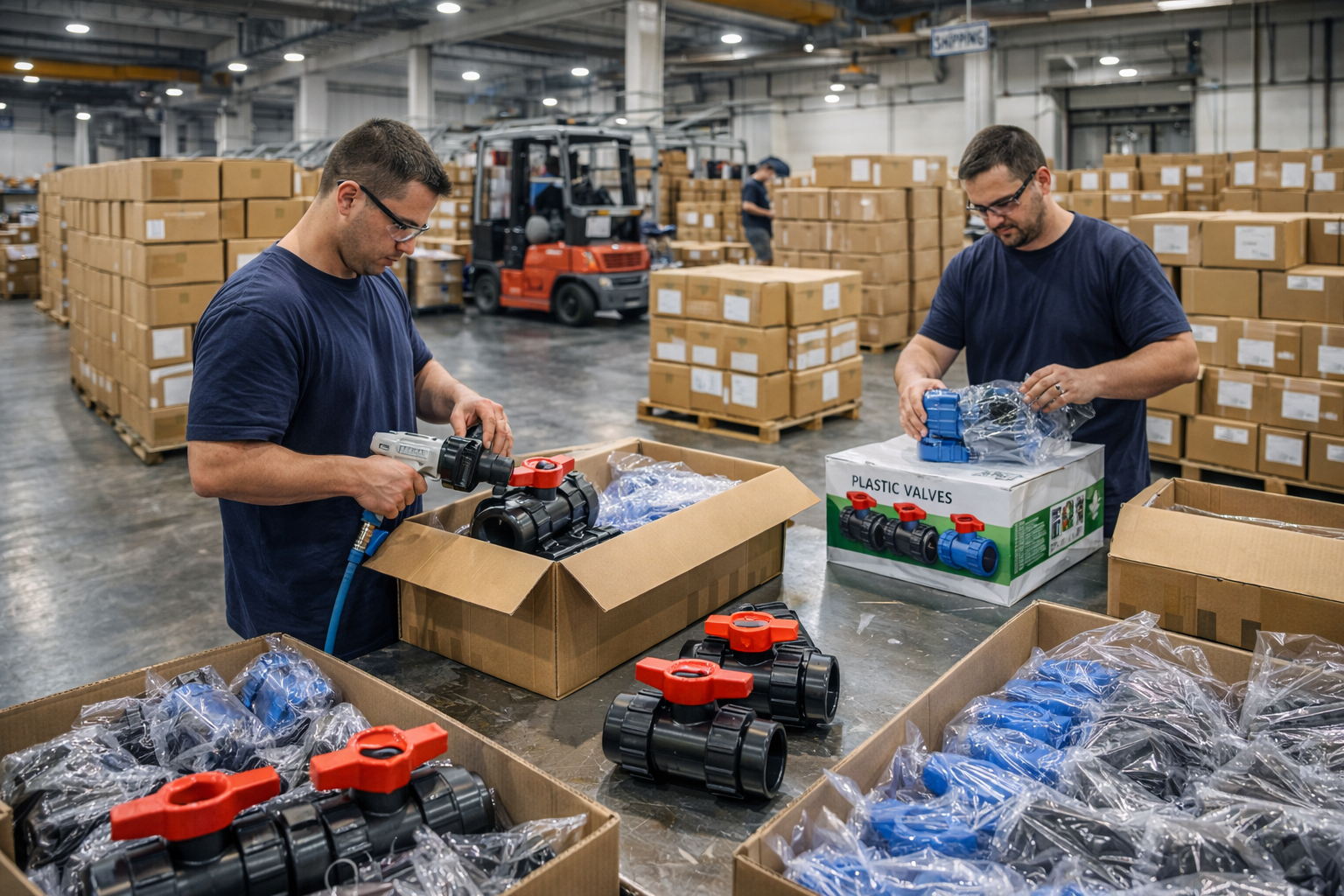
The product is cleaned, inspected for appearance, and labeled. It is packaged appropriately to prevent damage during transport, sorted into packages, and then shipped.
Applications
- Equipment Connections: Valves installed at the pump’s inlet and outlet for easy removal and cleaning of the impeller
- Instrumentation: Valves installed upstream of the pressure gauge without affecting the overall piping system
- Segmental Pressure Testing: Testing the integrity of each section of piping during installation
- Temporary Modifications: Quick connection of water supply pipes for festive decorative fountains
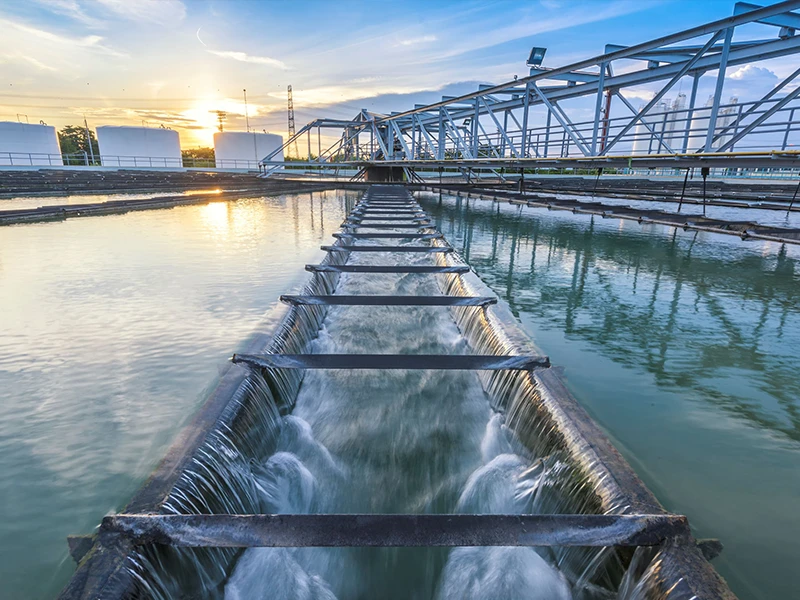
These valves are widely used in:
Agriculture and Irrigation
Factory Environment
Why Choose Us
Superior Quality
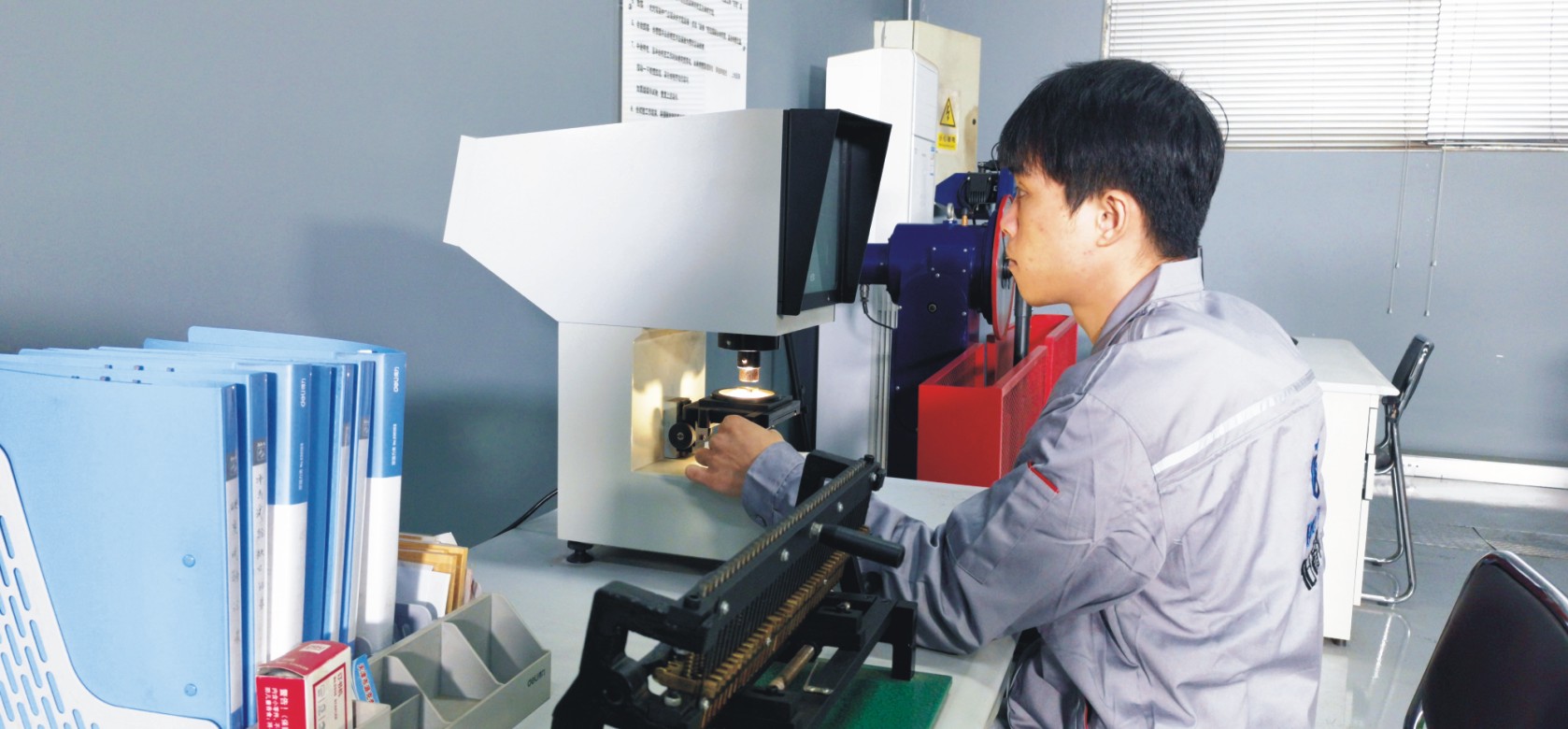
Our valves are produced from high-grade materials and subjected to strict quality inspections to guarantee dependable performance in challenging industrial environments.
Advanced Technology
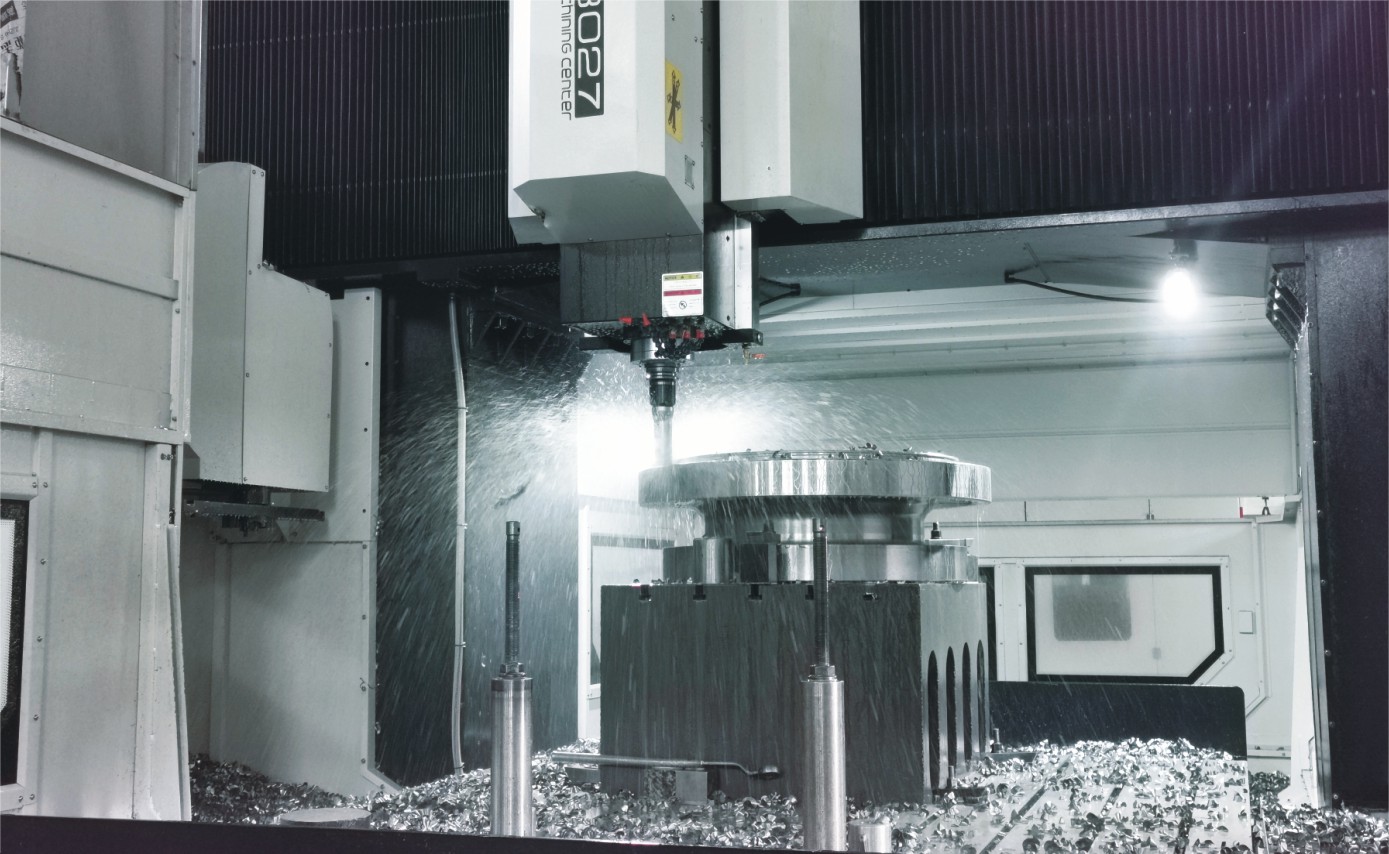
With cutting-edge CNC machining systems and high-precision manufacturing equipment, we ensure valves are made with outstanding accuracy and uniformity.
Competitive Pricing
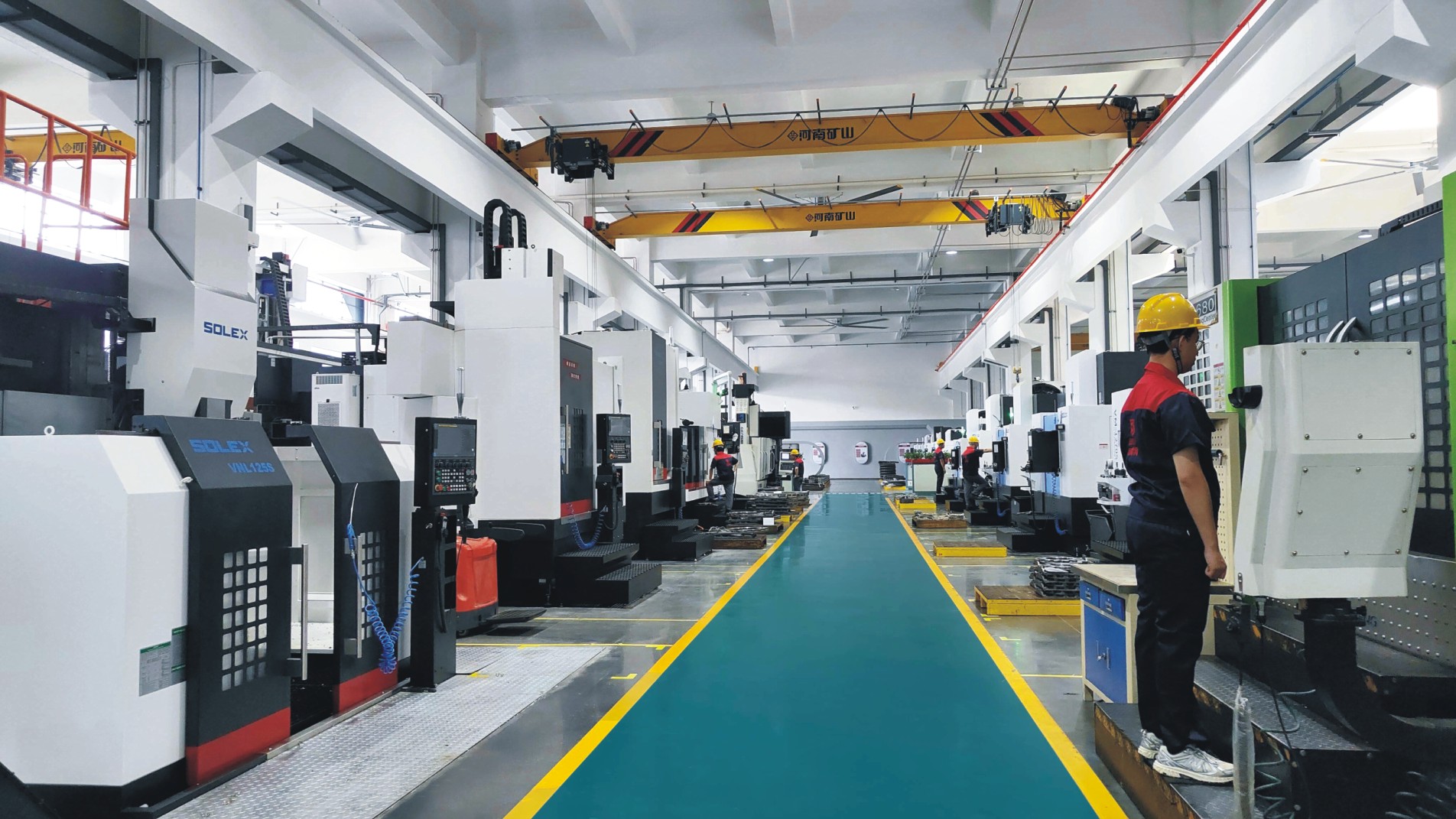
By streamlining production processes and sourcing materials in bulk, we provide premium-quality valves at competitive prices while maintaining excellent standards.
Expert Support
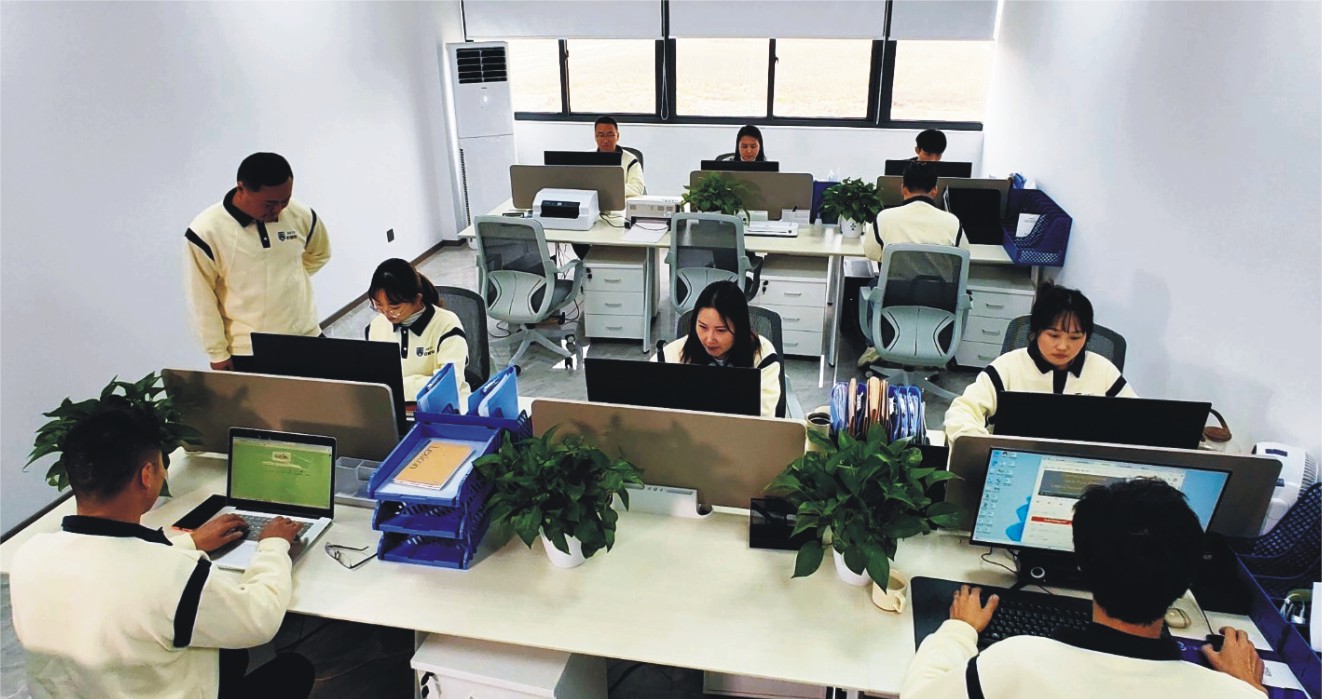
Our skilled technical team offers full support from product selection through after-sales service, helping ensure the best valve performance for your application.